Quick answer: Yes, you can wear a rudraksha and a crystal bracelet together; there is no widely accepted prohibition in Shaiva tradition. Most people keep them on separate wrists, often the rudraksha on the right and the crystal on the left, so the rudraksha is not treated as part of a stack. The rudraksha's own observances, such as removing it before sleeping or bathing, still apply.
If you already wear a rudraksha and you are thinking about a crystal bracelet — or you own a crystal bracelet and someone has just gifted you a rudraksha — you have probably asked the same question everyone asks: can these two be worn together, or does one cancel the other?
It is the most common question we get, and it rarely gets a straight answer. Most sellers either say "yes, absolutely" because they want the second sale, or "no, never" because they only sell one of the two. Neither is honest.
Here is what the traditions actually say, where they disagree, and how people who wear both handle it in practice.
Why this question comes up at all
Rudraksha and healing crystals come from two different places.
Rudraksha comes from Shaiva tradition. It is the seed of the Elaeocarpus ganitrus tree, worn for centuries in India as a devotional object associated with Lord Shiva. It carries ritual weight. There are rules around it, and those rules exist because it is treated as sacred rather than decorative.
Crystals, as most people wear them today, come from a much newer and more open practice. There is no scripture governing which stone you may wear. If you want the longer background on where crystal practice actually comes from, we have written about the spiritual history of crystals separately. It is also worth understanding the difference between gems and crystals, because a jyotish ratna and a healing crystal follow completely different rules — and the rudraksha question changes depending on which one you mean.
So the question is not really "will the energies clash." It is: does it show disrespect to wear a sacred object alongside something chosen by personal preference? That is a fair question, and it has more than one reasonable answer.
What rudraksha is traditionally worn for
Rudraksha is worn for steadiness of mind, focus during practice, and as a devotional link to Shiva. The number of faces on the bead — the mukhi — determines what it is traditionally associated with.
Five mukhi is by far the most commonly worn and the most commonly recommended for anyone starting out. It is linked to Guru and to general wellbeing, and it carries the fewest restrictions. Higher and rarer mukhi counts are usually chosen with guidance from someone who knows the tradition, not picked from a website.
Because rudraksha is worn as part of a practice rather than as a general accessory, it sits closest to how crystals are used in seated work. If that is the angle you are coming from, our guide on how to use healing crystals for meditation covers the same territory from the crystal side.
One point worth being clear about: rudraksha is not a medical object. It is worn as a devotional and contemplative practice. Claims that a particular mukhi lowers blood pressure or cures a condition should be treated with the same scepticism you would apply to any unverified health claim.
What crystals are worn for
Crystals are chosen by intention rather than by scripture. Someone wears black tourmaline because they want a sense of protection through a difficult period. Someone wears rose quartz because they want to hold a softer intention toward themselves. Someone wears pyrite because they are building something and want a daily reminder of it.
If you want the full picture of which stone is associated with what, we have written that up separately in what each crystal bracelet actually means, and there is a shorter overview of the benefits of wearing crystal bracelets if you are new to the idea. This article assumes you have already chosen, or are close to choosing, a stone.
The important structural difference: a rudraksha is a practice, and a crystal is usually an intention. That distinction matters for everything below.
Can they be worn together? The honest answer
There is no widely accepted prohibition in Shaiva tradition against wearing a crystal alongside a rudraksha. If there were a clear scriptural rule, it would be quoted constantly — and it is not.
What you will find is two positions among practitioners, and both are held sincerely.
The view that says yes. Rudraksha and crystals serve different purposes and do not compete. A rudraksha is worn for devotion and steadiness; a crystal is worn for a specific worldly intention. Wearing both is no different from wearing a rudraksha alongside a wedding ring or a watch. Many people who wear both have done so for years without concern.
The view that says keep them separate. This position is less about energy and more about respect. The argument is that a rudraksha is a sacred object and should not be treated as one bead among several in a stack. Practitioners who hold this view are not warning of harm — they are asking that the rudraksha not be reduced to an accessory.
Both are defensible. The practical middle ground that most people land on is this: wear both, but do not treat them as interchangeable, and do not stack them together for the look of it.
Same wrist or different wrist?
Separate wrists is the more common recommendation, and it is the one we suggest.
The reasoning is straightforward. On separate wrists, each object stays what it is. On the same wrist, the rudraksha tends to become a design element in a stack — which is exactly what the second view above objects to.
If you do want both on one wrist, keep the total to two strands. A rudraksha plus one crystal bracelet is manageable. A rudraksha plus three crystal bracelets is a stack, and the rudraksha is no longer the point of it.
The usual arrangement people settle on:
- Rudraksha on the right wrist, worn continuously, treated as a practice
- Crystal bracelet on the left wrist, changed as intentions change
Some traditions reverse this. Consistency matters far more than which side you choose.
The rudraksha rules that will now also apply to you
This is the part most people miss, and it is the single most useful thing in this article.
The rudraksha rules do not apply to your bracelet. They apply to you. Once you are wearing a rudraksha, those observances are part of your day regardless of what else is on your other wrist.
Depending on how strictly your family or teacher observes them, these typically include:
- Diet. Many practitioners avoid non-vegetarian food and alcohol while wearing rudraksha. Some remove it beforehand instead of abstaining.
- Removal at certain times. It is commonly removed before sleeping, before bathing, and in situations considered ritually impure.
- Handling. It is traditionally not passed around or handled casually by others.
- Care. It is oiled periodically and kept dry otherwise. Chemical soaps and perfume damage the seed over time.
Whether you observe all of these, some of them, or none is your decision and your family's. But decide before you start wearing one. People who begin casually and then discover the observances usually end up putting the rudraksha away, which serves nobody.
Your crystal bracelet, by contrast, has no such rules. It comes off for swimming and bathing for practical reasons — thread and stone damage — but there is no observance attached to it. What it does need is cleansing when you first receive it, and periodically after that. Our guide on how to cleanse and recharge crystals covers the safe methods, and what to do after buying a healing crystal walks through the first week.
Combinations people commonly wear
These are the pairings we see most often among customers who wear both. None of them is prescribed; they are simply what people arrive at.
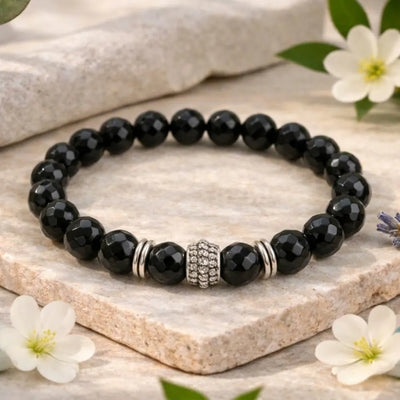
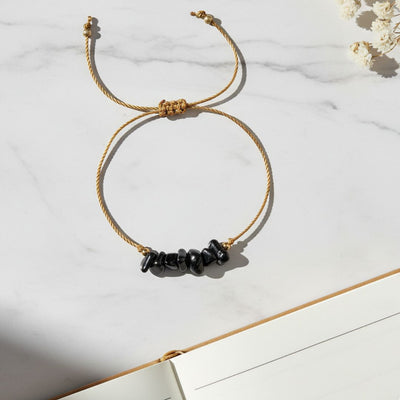
Rudraksha with black tourmaline. The most comfortable pairing of the lot, because both are worn for broadly the same purpose — steadiness and protection. Nothing is pulling in two directions. Our black tourmaline healing bracelet is the piece most often chosen for this, and the black tourmaline thread bracelet is the discreet option if you already wear a rudraksha visibly. There is a fuller explanation in our black tourmaline bracelet guide.
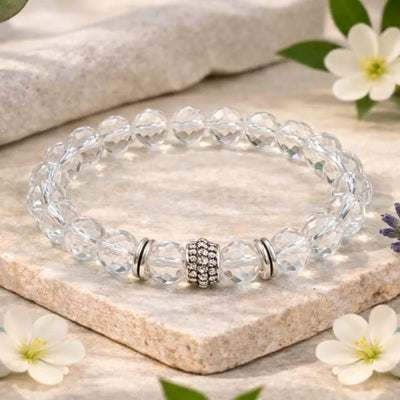
Rudraksha with clear quartz. Clear quartz is neutral in the way people use it — it is chosen to support whatever intention is already present rather than to add a competing one. This makes it an easy companion. The clear quartz crystal bracelet is the usual choice, and we have covered why clear quartz is called the master healer in more detail.
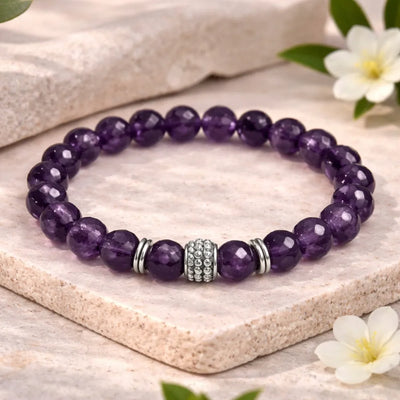
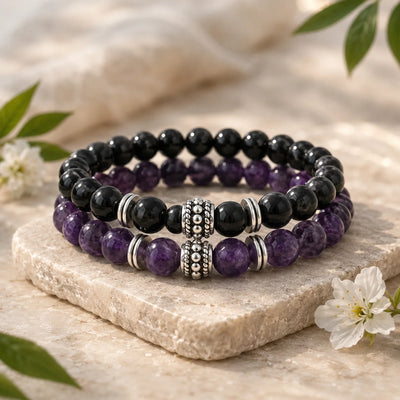
Rudraksha with a calming stone. Amethyst or moonstone alongside a rudraksha is common among people who wear the rudraksha for practice and the crystal for sleep or anxiety. The amethyst healing bracelet and the moonstone crystal bracelet are both worn this way — you can read more about moonstone's meaning and benefits before choosing between them. If you want protection and calm in one piece, the amethyst and black tourmaline pair covers both.
The pairing to think twice about: a rudraksha alongside a strongly activating wealth stone worn for material goals. There is no prohibition, but the two intentions sit awkwardly together, and people who try it often report that neither feels clear. If you want both, separate wrists genuinely helps here.
One more thing worth setting straight before you start: crystals are not fast. If you are expecting a noticeable shift in a week, read how long healing crystals take to work first, so the rudraksha does not get blamed for a crystal that was never going to act that quickly.
Pieces that already combine both
If the wrist question feels unresolved, there is a third option that avoids it entirely: keep the combination at home rather than on your body.
Several traditional pieces already bring rudraksha and crystal together in a single object, which sidesteps the stacking question completely:
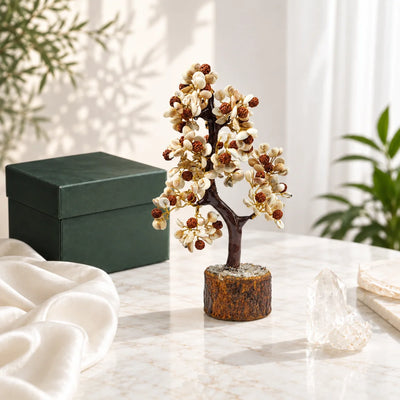
- The gomti chakra and rudraksha crystal tree, which combines rudraksha with gomti chakra and crystal on one piece
- The rudraksha gomti chakra orgonite pyramid, typically kept in a pooja room or on a work desk
- The Om orgonite pyramid, if you want the devotional element without rudraksha itself
For many people this is the cleaner answer. The rudraksha stays a devotional object in a devotional space, and the crystal bracelet on the wrist stays what it is. If you prefer to keep a stone in a pocket rather than on a wrist, black tourmaline tumbles work the same way with no wrist question at all.
You can browse the full crystal bracelet range, the black tourmaline collection, or everything in our protection collection to choose the piece that suits your intention.
In short
You can wear both. Most people do, and there is no clear rule against it.
Wear them on separate wrists if you can. Keep any stack to two strands if you cannot. Match the crystal's intention to the rudraksha's purpose rather than against it — protection and steadiness pair naturally, aggressive material goals less so.
And most importantly: decide about the rudraksha observances first, because those apply to you and not to the bracelet.
If you are buying your first stone to wear alongside a rudraksha and are unsure who to buy from, our honest guide to the best place to buy healing crystals in India covers what to check before you order.
Frequently asked questions
Can rudraksha and crystals be worn together?
Many people wear both and there is no widely accepted prohibition. Practitioners who advise against it usually do so on the grounds that the two belong to different traditions, not that harm results.
Should rudraksha and a crystal bracelet be worn on the same wrist?
Separate wrists is the more common recommendation, mainly so that neither is treated as decoration for the other. If you wear both on one wrist, keep the total to two strands.
Do rudraksha rules apply if I also wear crystals?
Yes, in the sense that the rudraksha rules apply to you rather than to the bracelet. If you observe restrictions around diet or removing it before certain activities, those continue regardless of what else you wear.
Which rudraksha mukhi suits a beginner?
Five mukhi is the most widely worn and the most commonly recommended for people starting out. Specific mukhi counts are usually chosen with guidance rather than picked independently.
Can I wear rudraksha with a protection stone like black tourmaline?
This is a common pairing. Both are worn for the same broad purpose, which is why it tends to sit more comfortably than combining rudraksha with an activating wealth stone.
Shop the products in this guide
Natural stones, free delivery and cash on delivery across India.