
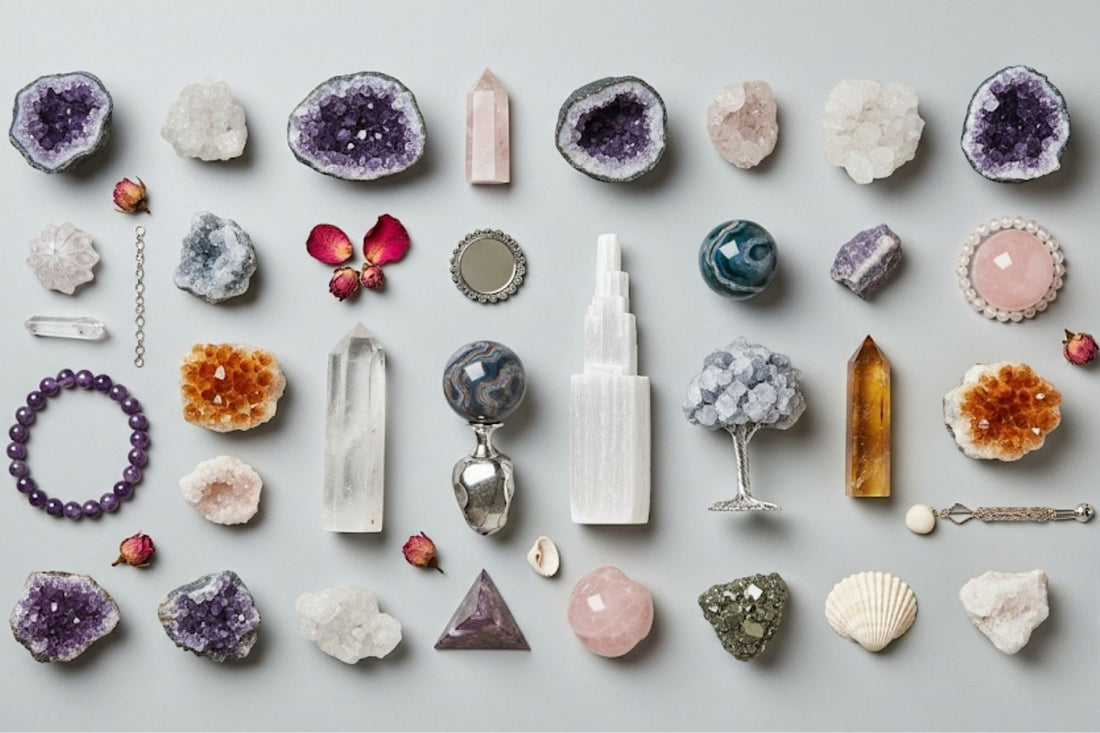
Quick answer: Crystals have a spiritual history stretching back thousands of years, from Hindu gemstone and chakra traditions to the malas Buddhist monks used in meditation. The archaeological record adds harder evidence: lapis lazuli was mined at Sar-i-Sang in Afghanistan for more than 6,000 years, Indus Valley workshops at Harappa and Lothal made carnelian and agate beads traded to Mesopotamia, and rock crystal was ground into early lenses.
Introduction
Crystals have fascinated humans for thousands of years. Their natural beauty, unique colors, and energy have made them more than just decorative stones. Across cultures and spiritual traditions, crystals were believed to hold special powers — bringing protection, prosperity, love, and healing. Today, healing crystals are still embraced by people around the world, whether as spiritual crystals, crystal bracelets, or meaningful crystals gifts. At Calminds, we continue this tradition by offering authentic crystals that connect modern life with ancient wisdom.
Crystals in Hinduism
In India, crystals have been deeply connected with spirituality for centuries. Hindu scriptures mention gemstones and crystals as tools for healing and energy work. Clear Quartz, for example, was believed to absorb, store, and amplify energy, making it ideal for meditation and chakra balancing.
Crystals are also linked with the concept of the seven chakras — energy centers in the body. Healing crystals chakra practices often involve using stones like Amethyst for the crown chakra, Rose Quartz for the heart chakra, or Tiger’s Eye for the solar plexus. In Hinduism, crystals were not only worn as jewelry but also placed in homes and temples to attract prosperity, protection, and spiritual awakening.
Crystals in Buddhism
Buddhism also highlights the importance of crystals in spiritual practice. Monks often used spiritual crystals in malas (prayer beads) for meditation and focus. Quartz, jade, and other stones were considered symbols of purity and enlightenment.
In Buddhist traditions, crystals are thought to help balance the mind, body, and spirit. Healing crystals include calming anxiety, encouraging compassion, and deepening meditation. Even today, many practitioners use crystals to stay centered and connected during their spiritual journey.
Universal Symbolism: Protection, Prosperity, Love, Healing
No matter where you look in history, crystals have always carried powerful meanings:
-
Protection: Dark stones like Obsidian were used as shields against negative energy. Ancient warriors carried them for safety.
-
Prosperity: Crystals to attract money, such as Citrine or Pyrite, were seen as magnets for abundance and success.
-
Love: Rose Quartz, often called the “stone of love,” has long been associated with emotional healing and relationships.
-
Healing: Spiritual crystals were used to restore balance in the body, mind, and soul, a practice that continues in crystal healing today.
What the Archaeological Record Actually Shows
Beyond tradition and belief, there is a documented, datable history of how people used these stones — and it is a good deal more interesting than the generalisation that crystals have always fascinated us. Three examples stand out.
Lapis lazuli and the world’s oldest mining trade. The deep blue lapis lazuli used across the ancient world came, almost without exception, from a single place: the mines at Sar-i-Sang in the Badakhshan region of Afghanistan, worked for more than 6,000 years. From there it travelled thousands of kilometres by land to Mesopotamia and to Egypt, where it was set into jewellery, cylinder seals and funerary masks. Much later, European painters ground the same stone into ultramarine, which for centuries was the most expensive pigment available — costlier by weight than gold, and for that reason often reserved for the robes of the Virgin in Renaissance painting. A single mineral source supplied both an ancient luxury trade and the most prized colour in Western art history.
Carnelian and agate in the Indus Valley. India’s own place in this history is unusually well evidenced. Carnelian and agate beads are found in quantity at Indus Valley sites including Harappa and Lothal, where bead workshops with drills, furnaces and unfinished blanks have been excavated. Indus bead-makers developed a long-barrel carnelian bead that required drilling techniques of remarkable precision for the period, and etched carnelian beads with white patterns produced by an alkali treatment. These beads did not stay local — Indian carnelian has been recovered from sites in Mesopotamia, evidence of a bead trade running across the Arabian Sea and up the Gulf several thousand years ago.
Quartz as the first optical material. Before glass was made well enough to shape into lenses, rock crystal — clear, transparent quartz — was the material craftsmen used. Ground and polished rock crystal was made into simple lenses and burning glasses in the ancient world, used to magnify and to concentrate sunlight to kindle a flame. The same stone that ended up in reliquaries and prayer beads was also, in its way, the beginning of optics.
These are checkable historical facts rather than traditional claims, and they show something the folklore alone does not: these minerals were valued enough to be mined systematically, traded across continents, and worked with genuine technical skill, long before anyone wrote down what they were supposed to mean.
Crystals in Modern Life
What was once ancient wisdom is now part of modern wellness culture. People today wear healing crystal bracelets, keep crystal collections at home, and choose crystal gifts for loved ones. From crystal designs in jewelry to decorative pieces in homes, crystals remain timeless symbols of beauty and meaning.
At the same time, crystal mining and sourcing have become important conversations. Many spiritual seekers now prefer crystals that are ethically mined and sold by trusted crystal stores or crystal websites. Calminds is proud to be part of this movement, offering carefully sourced crystals that align with both tradition and mindfulness.
Conclusion
From temples in ancient India to meditation halls in Buddhist traditions, crystals have always been seen as sacred tools. Whether for protection, prosperity, love, or healing, their spiritual role has never faded. Today, they are as relevant as ever — helping people connect with energy, balance, and intention. If you are new to the world of healing crystals, starting a small crystal collection can open doors to centuries of wisdom and a journey of self-discovery.
FAQs
1. What are healing crystals used for?
Healing crystals are used for balance, meditation, and emotional well-being.
2. Did ancient cultures use crystals?
Yes, both Hinduism and Buddhism valued crystals for healing, protection, and spiritual growth.
3. Are crystals good gifts?
Yes, crystal bracelets or spiritual crystal gifts are meaningful and thoughtful presents.
4. Can crystals attract money?
Yes, stones like Citrine and Green Aventurine are believed to bring prosperity and wealth.


