

Quick answer: Crystal Lakshmi Ganesh idols are worshipped in Diwali pooja exactly like clay or brass idols, adding each stone's traditional associations, such as green jade for steady abundance or red jasper for grounding. Place them together on a clean altar facing east or north. Unlike clay murtis, crystal idols are permanent and are never immersed. Stone meanings are tradition, not guaranteed prosperity.
Why Crystals Make Diwali Pooja Extra Special
Diwali, the festival of lights, is one of the most celebrated occasions in India. It is a time of new beginnings, prosperity, and happiness. Families gather to perform the sacred Lakshmi Ganesh pooja, inviting wealth, wisdom, and blessings into their homes.
For the complete Diwali 2026 dates, Lakshmi Puja muhurat, and five-day festival calendar, see our Diwali 2026 date, muhurat & 5-day festival calendar.
Traditionally, idols of Goddess Lakshmi and Lord Ganesha are made of clay, metal, or brass. Today, many families are choosing crystal idols for their Diwali celebrations instead.
The reason is straightforward. In crystal tradition, each stone carries its own associations — abundance, grounding, clarity, calm. When Lakshmi and Ganesha are carved in a particular stone, the idol carries both the deity's symbolism and the stone's traditional meaning. For younger buyers who want something that fits a modern home without losing the essence of the ritual, that combination has real appeal.
Crystal Types and Their Traditional Associations
Choosing a crystal idol lets you match the stone to what you are hoping to invite into the year ahead.
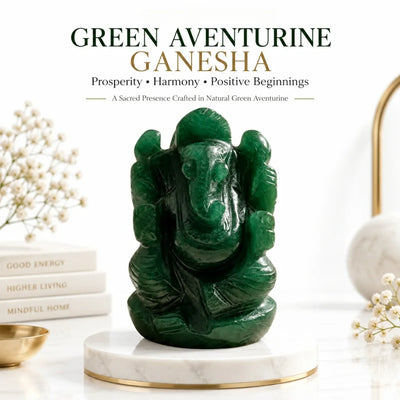
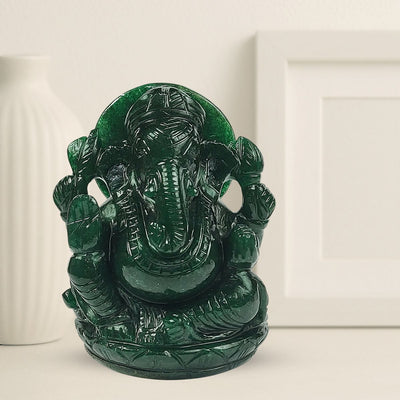
Green Jade
A symbol of luck, growth, and harmony. Green Jade is traditionally called a stone of abundance, associated with wealth that builds steadily rather than arriving suddenly. A common choice for those starting new ventures or families seeking consistent prosperity.
Red Jasper
Known for grounding, stability, and strength. Red Jasper is called the stone of endurance in crystal practice, associated with courage and resilience. Suited to anyone wanting to clear stagnation and build a firm foundation.
Yellow Aventurine
Associated with confidence, clarity, and financial prosperity. Yellow Aventurine is linked to the solar plexus chakra, the energy centre traditionally connected with self-belief and decision-making. A natural fit for entrepreneurs, students, and professionals.
Peach Sunstone
Radiates joy, warmth, and festive energy. Sunstone is known in crystal tradition as a stone of positivity and leadership, associated with dissolving hesitation and bringing enthusiasm — fitting for the mood of Diwali itself.
Lepidolite
In crystal tradition, Lepidolite is associated with calm, emotional balance, and a soothing atmosphere in the home. A good choice for families who want the pooja space to feel restful rather than busy.
You can also read: Benefits of Using Crystals in Your Diwali Celebrations
At Calminds, every crystal idol is handcrafted by skilled artisans and ships in premium packaging with a S.P.A.C.E. process card confirming how the piece was sourced, purified, activated, crafted, and examined.
Why Younger Buyers Are Choosing Crystal God Idols
For a newer generation, Diwali is about celebrating tradition without treating it as something separate from the way they actually live. That is why crystal idols keep gaining ground.
- Modern yet traditional: Crystal idols sit comfortably in contemporary interiors while keeping the ritual intact.
- Meaningful as gifts: Instead of a generic hamper, a crystal idol carries intention and thought.
- Lasting value: Unlike seasonal décor, these are pieces that stay in the home for decades.
- Useful year-round: The idol does not get packed away after the festival — it remains part of the mandir.
How to Use Crystal Idols in Diwali Pooja
- Placement: Place the idols on a clean altar, facing east or north. Keep Lakshmi and Ganesha together, as they represent wealth and wisdom in balance.
- Cleansing: Before Diwali night, gently wipe the idols with a clean dry cloth. Brief indirect morning light or overnight moonlight is enough to refresh them.
- Worship: During the pooja, light diyas, offer flowers, and chant mantras exactly as you would with any traditional idol.
- After Diwali: Keep the idols in your pooja room, living room, or workspace. They remain part of the shrine throughout the year.
A few placement details worth adding: the idols should sit on a chowki or altar shelf rather than directly on the floor, ideally at or above chest height when you are seated for puja. Avoid positioning them facing a bedroom door or a bathroom entrance, and keep the surrounding surface uncluttered. Our Ganesha idol Vastu and placement guide covers the complete table, including direction, posture, and how many idols traditionally belong in one shrine.
Why Crystal Idols Are Never Immersed
This is where crystal idols differ fundamentally from the clay murtis used at Ganesh Chaturthi, and it is worth being clear about.
A clay murti brought home for Ganeshotsav is installed through pran-pratishtha, worshipped for a set number of days, and then immersed — the immersion completes the ritual, and the murti is meant to dissolve. Crystal, stone, marble and metal idols belong to a different tradition. They are installed as sthayi or permanent idols in the home shrine and worshipped continuously, year after year. They are never immersed at Diwali, at Ganesh Chaturthi, or at any other point.
That is exactly what makes a crystal idol worth the investment: it is not a ten-day decoration, it is a permanent fixture of the mandir. Many families keep a crystal idol in the pooja room all year and bring a separate clay murti in for the Ganeshotsav days.
If you are choosing an idol for Ganesh Chaturthi specifically, our crystal Ganesha guide for Ganesh Chaturthi 2026 covers the festival dates, trunk direction, stone comparisons, and how to tell natural stone from resin before you pay.
Diwali: Festival of Blessings and Light
Diwali is not only about lights and fireworks. It is about welcoming blessings into the home, and the Lakshmi Ganesh pooja is its central ritual — a balance between material prosperity and spiritual wisdom.
- Lakshmi represents abundance and wealth.
- Ganesha represents wisdom, clarity, and the removal of obstacles.
Worshipping them together carries a specific meaning: that prosperity should arrive with wisdom, and success without obstacles. Choosing a crystal idol for that ritual adds the stone's own traditional associations to the same intention.
How to Tell Real Stone From Resin
Resin and dyed-glass idols are widely sold as crystal, particularly in the lower price bands. Four checks before you pay:
- Weight. Natural stone is noticeably denser than resin. This is the most reliable field test.
- Temperature. Genuine stone stays cool and warms slowly. Resin matches room temperature immediately.
- Natural variation. Real stone shows colour banding and small inclusions. Perfectly uniform colour across a whole idol is a warning sign.
- Certification. For anything above ₹5,000, ask for a certificate identifying the stone.
Every Calminds idol ships with a S.P.A.C.E. process card, and higher-value pieces include a certificate of authenticity identifying the stone.
Shop Crystal Idols
Size is usually the deciding factor. A 3-inch idol suits a compact home mandir or an office desk. A 6-inch piece has the presence to anchor a pooja room and is the usual choice for housewarmings, weddings, and business openings.
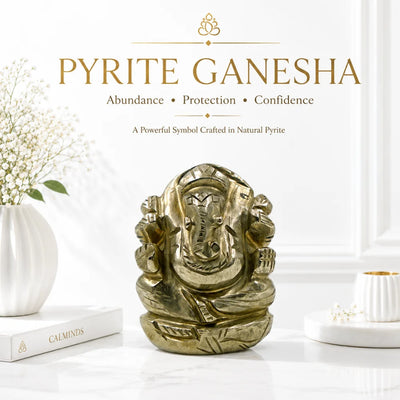
Shop: Green Jade Ganesha (3 Inch) · Green Jade Ganesha (6 Inch) · Pyrite Ganesha · Browse all God Idols
Crystal meanings and Vastu guidance described here are based on traditional beliefs and spiritual practices. They are not a substitute for medical, financial, or professional advice.
Shop the products in this guide
Natural stones, free delivery and cash on delivery across India.
Frequently Asked Questions
Can you use crystal Lakshmi-Ganesha idols for Diwali pooja?
Many households do, alongside or instead of metal idols. It is a modern addition rather than a prescribed element of the ritual, so it comes down to family practice.
Where should Lakshmi and Ganesha be placed?
Traditionally Ganesha sits to Lakshmi's left when viewed from the front, both facing into the home, in the pooja space or the north-east. The idols are kept above floor level on a clean surface.
Which crystal is chosen for Lakshmi-Ganesha idols?
Green jade, yellow aventurine, red jasper and peach sunstone are the common materials, each with its own traditional association. Choice is usually made on colour and the association rather than anything else.
How do you care for crystal idols?
Wipe with a soft dry or barely damp cloth. Avoid soaking and harsh cleaners. Fine carved details such as the trunk or crown chip most easily, so keep the idols somewhere stable and away from shelf edges.
Can you keep crystal idols out all year?
Yes, most people do rather than storing them after Diwali. Keep them out of prolonged direct sunlight if the stone is amethyst or rose quartz, which fade over months.
Do crystal idols bring prosperity?
There is no evidence that an object affects finances. These are carved natural stone pieces within a devotional tradition, and that is the basis on which we make and sell them.


