

Quick answer: Crystals are used at Diwali as décor with traditional meaning: selenite Shubh Labh plates near the altar, rose quartz, red jasper and green aventurine tea light holders, and crystal Lakshmi-Ganesh idols that are never immersed. Keep selenite and pyrite away from water and keep diyas off crystals. Associations with prosperity and protection are traditional, not proven financial or physical effects.
Lighting Up Diwali with More Than Diyas
Diwali is a festival of lights, joy, and new beginnings. We decorate our homes with diyas, rangoli, and flowers — and a growing number of families add crystals to that arrangement, as décor with meaning attached rather than ornament alone.
Crystals have been used for centuries in ritual, meditation and devotional practice. Adding them to your Diwali decor connects the festival to that tradition. What follows is how they are traditionally used, which pieces suit which part of the celebration, and — the part most guides skip — which stones will be ruined by a diya or a water offering.
For this year's dates, see our Diwali 2026 date and muhurat calendar — the main Lakshmi Puja falls on Sunday, 8 November 2026.
The Place of Crystals in Diwali Practice
Diwali is about clearing out the old and welcoming the new. In crystal tradition, stones are kept for exactly that kind of marking — a deliberate object that holds an intention. Traditionally, they are used at Diwali to:
- Mark a home as cleansed before the new year begins
- Hold an intention of abundance, love or peace
- Create a calmer focal point during the festive rush
- Sit alongside the seven-chakra colour tradition as you step into the new year
These are traditional and spiritual associations, not medical or financial claims. There is no measured property of any stone that purifies a room or changes your finances.
Which Crystal for Which Part of Diwali
| Piece | Traditionally kept for | Where it goes |
|---|---|---|
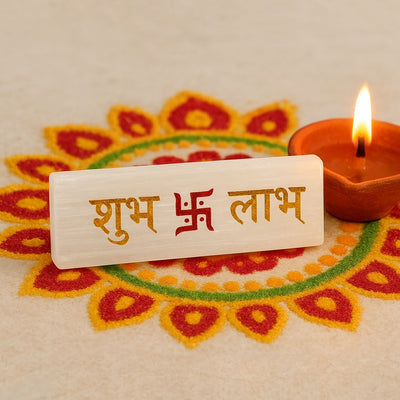
| Selenite Shubh Labh Plate | Auspiciousness and profit — Shubh Labh is the traditional Diwali symbol; selenite is the stone crystal practice treats as self-cleansing | Entrance, pooja altar, mandir |
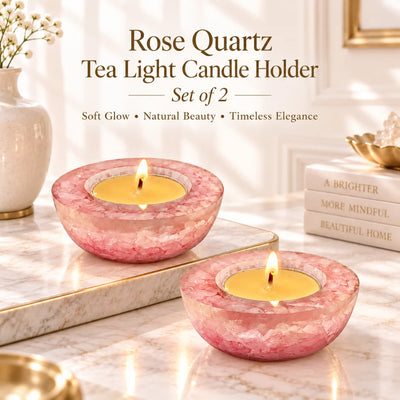
| Rose Quartz Tea Light Holder | Love and harmony — the traditional stone of the heart | Living room, bedroom, family spaces |
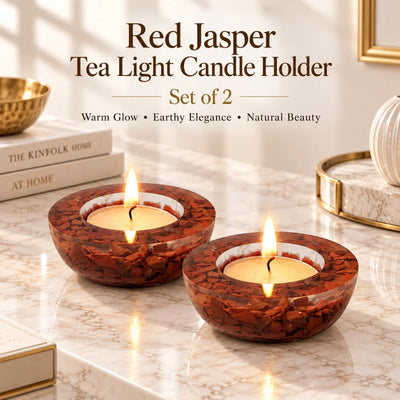
| Red Jasper Tea Light Holder | Grounding, courage and protection | Pooja space, meditation corner, entrance |
| Green Aventurine Tea Light Holder | Luck and opportunity | Pooja altar, workspace, desk |
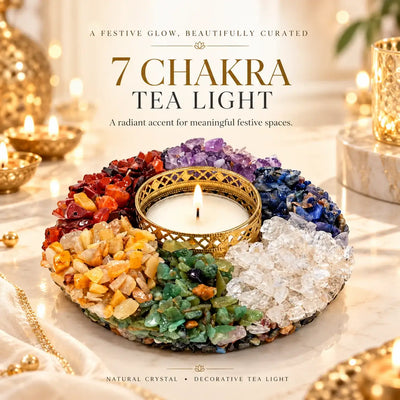
| 7 Chakra Tea Light Holder | The seven chakra colours in one piece | Inside a rangoli or on a pooja thali — 2.5 cm high, so it sits in the arrangement rather than over it |
| Crystal Lakshmi-Ganesh pair | Prosperity and wisdom together on the altar | Mandir — a permanent idol, never immersed |
A note on each
Selenite is traditionally called the stone of purity, and a Shubh Labh plate pairs that tradition with the symbol already used in Diwali pooja. Rose quartz is the traditional stone of love; lit from within, the pink glow suits rooms where family gathers. Red jasper is kept traditionally for grounding and steadiness. Green aventurine is traditionally associated with luck and new opportunities, which is why it often ends up near a desk rather than an altar.
Crystal Idols for Your Diwali Altar
Beyond décor, many families place a crystal Lakshmi-Ganesh pair on the altar for the main puja. Unlike clay murtis, these are permanent idols that stay in the mandir year after year and are never immersed. Our guide to crystal Lakshmi Ganesh idols for Diwali pooja explains which stone to choose, where to place the pair, and how to tell real stone from resin before you buy.
Crystal Care During Puja: What Not to Do
This is the part most Diwali crystal guides leave out, and it is the one that saves a piece on the night. Diyas, water offerings and panchamrit share the altar with your crystals, and not every stone tolerates them.
| Stone | Water & abhishek | Diya flame & heat | Why |
|---|---|---|---|
| Selenite (Shubh Labh plates, charging plates, towers) | Never | Keep flame off the stone | Gypsum at Mohs 2 — genuinely dissolves in water, and loses its water of crystallisation when heated, so it dulls and crazes |
| Pyrite (trees, orgonite) | Never | Keep away | Iron sulfide — oxidises and stains in damp conditions |
| Quartz family (clear quartz, amethyst, rose quartz, citrine) | Brief contact tolerated | Not in direct flame | Mohs 7 and water-stable, but amethyst and citrine can fade with strong heat and sustained light |
| Tea light holders | Wipe dry | Made for a flame | Designed to hold a lit tea light — the one crystal piece that is |
| Carved crystal idols | No immersion | Keep away | Polish and any adhesive joins are damaged by immersion — crystal idols are not immersed like clay ones |
The practical rule: keep diyas and water offerings on brass or steel, and set crystals beside them rather than under or behind them. A tea light holder is built for a flame; a selenite plate is not.
How to Use Crystals in Diwali Rituals
- During pooja: place a Shubh Labh plate near the idol, clear of the diya and any water offering.
- As décor: crystal tea light holders light corners of the home. A low, flat piece such as the 7 Chakra Tea Light Holder sits inside a rangoli or on a pooja thali without towering over the arrangement.
- For meditation: hold a stone or keep it nearby as a focus during festive prayers.
- As gifts: see the shortlist below.
Also worth reading: the benefits of Green Jade Ganesha for Diwali.
When to Order So It Arrives in Time
Calminds delivers within 0–7 days across India, with free shipping on prepaid orders. These are the safe last order dates — the latest, not the earliest.
| For this day | Date (2026) | Order by |
|---|---|---|
| Dhanteras | Fri 6 Nov | Fri 30 Oct |
| Choti Diwali | Sat 7 Nov | Sat 31 Oct |
| Diwali & Lakshmi Puja | Sun 8 Nov | Sun 1 Nov |
| Bhai Dooj | Tue 10 Nov | Tue 3 Nov |
Courier networks congest through late October and early November, so ordering ahead of these dates rather than on them is the safer call.
For zodiac-based gifting, see our Diwali 2026 crystal gift guide for every Rashi.
Why Crystals Make Good Diwali Gifts
A crystal gift carries a specific meaning rather than being a generic hamper, and it stays in the house afterwards. If you are shortlisting, our roundup of 10 crystal gift ideas for Diwali covers the pieces that work best as presents, from Ganesha idols to crystal trees.
What This Is, and What It Isn't
Crystals have a long place in Indian tradition and in ritual practice, and that is the spirit in which we sell them. The associations described above — prosperity, protection, love, luck — come from that tradition, not from any measured property of the stone.
There is no peer-reviewed scientific evidence that crystals purify a space, remove negative energy, raise the vibration of a room, activate a chakra, or bring wealth. Nothing here treats, cures or prevents any medical condition, and nothing on this page is medical or financial advice. What a crystal on your altar honestly gives you is a deliberate object and a small ritual — which, at Diwali, is rather the point.
Final Thoughts
Whether you are decorating, performing pooja, or choosing gifts, Diwali crystals sit naturally alongside diyas and rangoli. Just keep them dry, keep them clear of the flame, and they will be on the altar again next year.
Every piece at Calminds goes through our S.P.A.C.E. process, Reiki-activated by our founder Sweeny Panjrath, a Certified Reiki Grandmaster with over nine years of practice, before dispatch. Browse Calminds to see the full range.
Shop the products in this guide
Natural stones, free delivery and cash on delivery across India.
Frequently Asked Questions
How can you use crystals in Diwali celebrations?
The common uses are tea light holders for the diyas, a Selenite Shubh Labh plate in the pooja space, and crystal Lakshmi-Ganesha idols. All three work as decor after the festival too.
Which crystals suit Diwali?
Citrine and yellow aventurine for the prosperity association, green aventurine for new beginnings, and selenite for the pooja space. These are traditional associations rather than effects.
Can I gift crystals on Diwali?
Yes, and they stay in the house rather than being consumed. See our Diwali crystal gift ideas for specific picks.
Can you place crystals on the pooja thali?
Many households do, and it is a modern addition rather than a prescribed part of the ritual. Keep soft stones such as selenite away from flame, oil and water on the thali.
Can I put water or panchamrit on a crystal during puja?
Not on selenite or pyrite. Selenite is gypsum at Mohs 2 and genuinely dissolves in water; pyrite is an iron sulfide and stains as it oxidises. The quartz family tolerates brief contact. Carved crystal idols should never be immersed, unlike clay ones.
Are crystal tea light holders safe with a flame?
Use a proper metal or glass tea light cup inside the holder, and never place a flame directly against selenite, which is soft and heat-sensitive. Keep holders on a stable, heat-tolerant surface.
How do you clean wax off a crystal holder?
Let the wax harden fully, then lift it out gently with a blunt edge. Do not use hot water, especially on selenite, which dissolves. A dry cloth finishes the job.
How do I care for my crystals after Diwali?
Dust them dry with a soft cloth and store soft stones like selenite separately, since almost anything harder will scratch them. Avoid water entirely on selenite and pyrite. If you like to refresh them energetically, moonlight or intention-setting does the job without any water contact.
When should I order to get gifts in time for Diwali 2026?
Calminds delivers within 0–7 days across India. For Dhanteras on 6 November, order by 30 October; for Diwali itself on 8 November, order by 1 November. Earlier is safer because courier networks congest in late October.
Do crystals make Diwali more auspicious?
There is no evidence that any object affects fortune. Crystals at Diwali are meaningful decor within a festival about light and fresh starts, and we would rather describe them that way.


