Quick Answer
Reiki is a Japanese energy practice developed by Mikao Usui in the 1920s. A practitioner places their hands lightly on or just above the body, with the intention of supporting relaxation and balance. It is a complementary wellness practice — not a medical treatment, and not a religion.
Learning Reiki happens through attunement, a ceremony conducted by a Reiki Master, followed by structured levels: Level 1 (self-healing), Level 2 (symbols and distance healing), Level 3 (master level), and Master Teacher (qualified to attune others).
This guide covers what happens in a session, what the levels mean, what the clinical research actually shows, and how to choose a teacher without being misled.
What Does the Word Reiki Mean?
The word combines two Japanese characters:
- Rei — universal, or higher wisdom
- Ki — life energy (the same concept as prana in Indian tradition, or chi in Chinese)
The system as practised today was developed by Mikao Usui in Japan in 1922, and reached the West through Hawayo Takata in the 1930s. Most modern lineages trace back to Usui.
What Actually Happens in a Session
People are often surprised by how undramatic a session is. There is no massage, no manipulation, and you stay fully clothed.
- You lie down on a treatment table or sit comfortably.
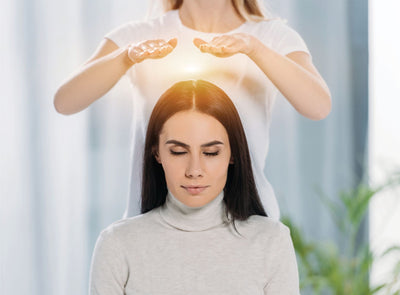
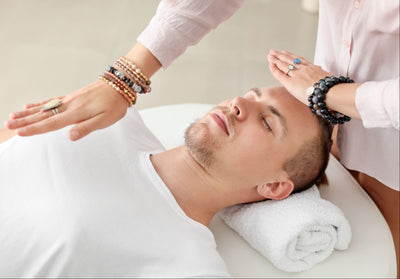
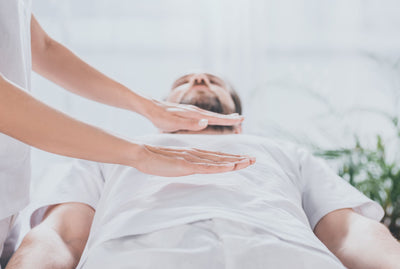
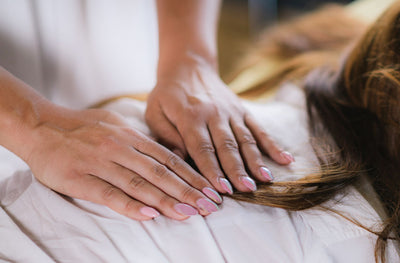
- The practitioner places their hands lightly on, or a few inches above, a series of positions — usually starting at the head and working down.
- Each position is held for a few minutes.
- A full session typically lasts 45–60 minutes.
What people commonly report: warmth from the practitioner's hands, tingling, deep relaxation, and occasionally falling asleep. Some people feel very little, particularly in a first session. Both responses are normal.
What the Research Actually Says
This is the section most Reiki pages skip entirely, or replace with vague claims. The honest picture is mixed, and worth knowing before you spend money on a course.
The critical view
The US National Center for Complementary and Integrative Health (NCCIH) states that Reiki has not been clearly shown to be effective for any health-related purpose, noting that most research has not been of high quality and results have been inconsistent.
A 2008 systematic review of randomised clinical trials (Lee et al., published in the International Journal of Clinical Practice) examined nine RCTs and concluded that the evidence was insufficient to suggest Reiki is an effective treatment for any condition, citing small sample sizes, inadequate study design and poor reporting.
The supportive view
A 2014 review of randomised trials with effect-size calculations (Thrane & Cohen, Pain Management Nursing) analysed seven studies meeting inclusion criteria and calculated effect sizes ranging from d=0.24 to d=2.08 within groups. The authors concluded there is evidence to suggest Reiki may be effective for pain and anxiety, while noting the small number of studies.
A 2022 review published in Frontiers in Psychology examined whether Reiki outperforms placebo specifically for mental health symptoms. It graded the evidence as high for clinically relevant stress and depression, moderate-to-high for clinically relevant anxiety, and low-to-moderate for normal (non-clinical) levels of stress and burnout.
The honest conclusion
The research base is genuinely small. Most published studies are pilots with fewer than 20 participants per group, and many lack proper control groups. Independent replication is largely missing.
Where evidence does exist, it is strongest for relaxation, stress and anxiety — not for treating disease. That is a meaningful and useful finding, and it does not need exaggerating.
What this means practically: Reiki is reasonable to use alongside medical care as a relaxation and wellbeing practice. It is not reasonable to use it instead of medical care, and any teacher who tells you otherwise is not being straight with you.
The Five Reiki Principles
Usui taught five principles intended for daily recitation. They are the ethical backbone of the practice, and are worth reading even if you never take a course:
Just for today, I will not be angry.
Just for today, I will not worry.
Just for today, I will be grateful.
Just for today, I will do my work honestly.
Just for today, I will be kind to every living thing.
The phrase "just for today" is deliberate. It makes the practice manageable rather than an impossible lifetime vow.
What Is a Reiki Attunement?
This is what distinguishes Reiki from most other wellness practices. You cannot learn Reiki purely from a book or video, because the tradition holds that the ability is transmitted through an attunement — a ceremony performed by a qualified Reiki Master.
During an attunement the teacher performs a specific sequence intended to open the student's energy channels. It takes a few minutes and requires nothing from the student except sitting quietly.
Each level has its own attunement. This is why Reiki is taught in person or in a live online session, and why any course offering Reiki certification without an attunement is not teaching Reiki in the traditional sense.
The Reiki Levels Explained
| Level | Focus | What You Can Do After |
|---|---|---|
| Level 1 | Self-healing and foundations | Practise Reiki on yourself, family and friends using hand positions |
| Level 2 | Symbols and distance healing | Use the three traditional symbols, send healing at a distance, work on emotional and mental patterns |
| Level 3 (Master) | Master symbol and deeper practice | Work at master level with a deepened personal practice |
| Master Teacher | Teaching and attuning others | Run your own courses and attune students |
| Grand Master | Advanced lineage work | Highest level in most modern lineages |
An important distinction: Level 3 and Master Teacher are often sold together, but they are not the same thing. Level 3 deepens your own practice. Master Teacher qualifies you to attune others. If your goal is to teach professionally, check which one a course actually includes before you pay.
Also worth knowing: the Grand Master levels are not part of Usui's original system. They are a later extension. Many respected practitioners work with them; many equally respected practitioners never do.
At Calminds these are taught as separate stages: Level 1 + Level 2, Level 3, Master Teacher Training, and Grand Master. Our full guide to the Reiki levels goes into what each stage covers.
What Reiki Can and Cannot Do
Reiki is reasonably used to:
- Support relaxation and reduce the felt experience of stress
- Provide a structured self-care and mindfulness routine
- Complement conventional medical treatment as a supportive practice
- Offer comfort during difficult periods
Reiki cannot:
- Cure, treat or diagnose any disease
- Replace medication, surgery, or any prescribed treatment
- Substitute for psychiatric or psychological care
- Guarantee any specific outcome
A responsible practitioner will say this openly and will never advise you to stop or delay medical treatment.
Who Is Reiki For?
Learning Reiki tends to suit:
- People wanting a structured daily self-care practice
- Yoga teachers, therapists and bodyworkers adding a complementary skill
- Caregivers looking for a gentle way to support family members
- Anyone drawn to energy work who wants a formal framework rather than guesswork
- People planning to practise professionally, who will eventually need Master Teacher level
No prior experience is needed for Level 1. Reiki is not tied to any religion and does not require you to hold any particular belief.
How to Choose a Reiki Teacher
Reiki is unregulated in India — there is no government body certifying teachers, and anyone can print a certificate. That is not a reason to avoid Reiki. It is a reason to check who you are learning from.
- Ask about lineage. A genuine teacher can trace their attunement line back towards Usui and will not mind being asked.
- Confirm attunement is included and how it will be conducted — in person or live online. A pre-recorded video course cannot include an attunement.
- Ask how many students per batch. Reiki is taught practically; very large batches limit hands-on time.
- Check what happens after the course. Manual, follow-up support, practice guidance.
- Be wary of medical claims. Any teacher promising to cure disease is not practising responsibly, and the research does not support such claims.
- Be cautious of "become a Master in one day". Traditional practice expects a settling period between levels — usually at least 21 days.
Reiki and Crystals
Crystals and Reiki are separate traditions often practised together. Some practitioners place stones on or around the body during a session, most commonly clear quartz, amethyst, or a chakra set.
Crystals are also commonly Reiki-charged before use — the basis of the Calminds S.P.A.C.E. process. Our guide on Reiki-charged vs normal crystals explains what that means and what it does not.
Neither practice requires the other. Plenty of Reiki practitioners use no crystals at all.
Frequently Asked Questions
What is Reiki in simple terms?
A Japanese energy practice where a trained practitioner places their hands lightly on or above the body with the intention of supporting relaxation and balance. It is a complementary wellness practice, not a medical treatment.
Is there scientific evidence that Reiki works?
The evidence is mixed and the research base is small. The NCCIH states Reiki has not been clearly shown to be effective for any health purpose. Some reviews — including a 2022 Frontiers in Psychology analysis — found effects over placebo for clinically relevant stress, anxiety and depression. Evidence is strongest for relaxation and stress, and weakest for treating disease.
Is Reiki a religion?
No. Reiki has no deity, no scripture, and no requirement of belief. People of every faith and of no faith practise it.
Can anyone learn Reiki?
Yes. Level 1 requires no prior experience or special ability. It does require an attunement from a qualified Reiki Master, which is why Reiki cannot be learnt from a book or recorded video alone.
How long does it take to learn Reiki?
Level 1 is typically taught over one to two days. Traditional practice recommends around 21 days before moving to Level 2, so reaching Master Teacher level usually takes months rather than days.
Does Reiki hurt?
No. There is no pressure or manipulation. Most people describe warmth, tingling, or deep relaxation.
What is the difference between Reiki Level 3 and Master Teacher?
Level 3 deepens your own practice at master level. Master Teacher qualifies you to attune and teach others. They are often bundled, so confirm which a course includes if you intend to teach.
Can Reiki be done at a distance?
Distance healing is taught at Level 2 using one of the traditional symbols. Whether it produces an effect is a matter of personal belief and is not scientifically established.
Sources and Further Reading
Evidence statements on this page draw on: the US National Center for Complementary and Integrative Health (NCCIH); Lee, Pittler & Ernst (2008), a systematic review of randomised clinical trials of Reiki; Thrane & Cohen (2014), a review of randomised trials with effect-size calculations published in Pain Management Nursing; and a 2022 review in Frontiers in Psychology examining Reiki against placebo for mental health symptoms. Historical and practice details are drawn from the Usui tradition. Readers are encouraged to consult these sources directly.
Final Thoughts
Reiki is quieter than most people expect. A session is largely stillness, and the practice is largely consistency.
If you are curious, the honest first step is a session with a practitioner rather than a course. See how you respond before committing to attunement. If it resonates, Level 1 gives you a self-healing practice you can use daily for the rest of your life.
If you would like to learn with us, our Reiki courses run from Level 1 through to Grand Master, taught by Certified Reiki Grandmaster Sweeny Panjrath, with attunement, manual and certification included at each stage.
Disclaimer: Reiki is a complementary wellness practice. It is not scientifically proven to treat or cure any condition and is not a substitute for medical, psychiatric, or psychological care. Always consult a qualified healthcare professional for medical concerns.
Shop the products in this guide
Natural stones, free delivery and cash on delivery across India.