Quick answer: A nazar battu for home is a charm kept at the main entrance to turn away nazar, the envious gaze in Indian tradition. Common types are nimbu-mirchi, a black face mask, a blue evil eye, a horseshoe and crystals. Hang it on or above the main door facing outward, change nimbu-mirchi weekly and remove anything broken. It is a cultural belief, not guaranteed protection.
A nazar battu for home is any object hung or kept at the entrance to turn away nazar, the envious or admiring gaze that Indian tradition says can fall on a happy household. It can be a lemon and seven green chillies, a black demon-face mask, a blue evil eye, a horseshoe or a crystal. This guide covers what each type means, where and how high to hang it, what Vastu customs say, and how often to replace it.
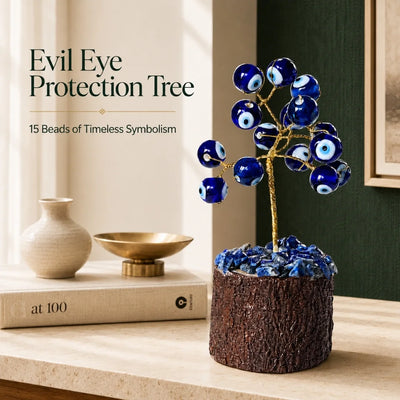
If you want something that looks good all year and needs no replacing, the Nazar Protection Set (₹1,399) pairs a small evil eye tree for the entrance with a green aventurine evil eye bracelet, and the Evil Eye Tree (₹449) is available on its own.
What does nazar battu mean
Nazar means sight or gaze and in common Hindi and Urdu it denotes the evil eye, the notion that envy or even too much praise can bring bad luck to a person, a child, a new automobile or a home. “Battu” is the item that receives or deflects that gaze. A nazar battu is a charm that catches the eye first all in all.
That’s why so many nazar battus are purposely strange or striking: a grinning black face, a dangling lemon, a vivid blue eye. The notion is that the eye is attracted to the attractiveness, not to the thing you want. The same thought is behind a kala teeka on a baby’s ear and in the painted “Buri nazar wale tera muh kala” on the rear of trucks.
It helps to be clear what this is. Nazar is a cultural belief in India, West Asia and the Mediterranean. There is no magic known against jealousy or disaster. What a nazar battu really does is designate your doorway with a custom your family recognises, and in the case of an evil eye or a crystal piece, add a decorative thing you will see every day.
Types of nazar battu for home
| Type | Where it is usually kept | How long it lasts | Good to know |
|---|---|---|---|
| Nimbu-mirchi (lemon and 7 chillies) | Outside the main door or shop shutter | About a week | Customarily changed on Saturday; dries and attracts insects |
| Black demon-face mask (rakshas mukh) | Above the door, on new construction | Years | Faces outward towards the street |
| Blue evil eye (glass) | Entrance, door handle, desk, car | Years | Same symbol as nazar boncuğu in Turkey and mati in Greece |
| Horseshoe (ghode ki naal) | Above the main door | Years | Customs differ on whether the open end faces up or down |
| Crystal pieces (black tourmaline, tiger eye) | Entrance table, desk, shelf | Years | Natural stone that doubles as décor |
| Evil eye tree | Entrance console, desk, north-east shelf | Years | Indoor, no upkeep beyond dusting |
Nimbu-mirchi
The lemon with seven green chillies strung on a thread is the most familiar nazar battu in North and West India, hung outside homes, shops and on vehicles, and traditionally replaced every Saturday. The sour and pungent ingredients are said to "satisfy" Alakshmi, the goddess of misfortune in folk tradition, so she does not enter. It is a living custom, but it rots, so replace it before it spoils.
Black face mask
Black rakshas or bhoot face with bulging eyes and tongue out, draped over an entrance or an under-construction building. It's designed to be the ugliest item in sight so that the eye will fall on it first.
Blue evil eye
The concentric blue-and-white eye has been made in glass around the eastern Mediterranean for thousands of years and is now one of the most common nazar battus in Indian homes. It is cleaner and longer-lasting than nimbu-mirchi and works as plain décor too. Our guide to the evil eye symbol covers its history in detail.
Horseshoe
An iron horseshoe, ideally one that has been worn by a horse, is nailed above the door in many Indian and European homes. Some customs say the open end should point up to "hold" good fortune, others say down. Customs vary; follow your family's practice.
Crystal nazar battu
Black tourmaline and tiger eye are the two stones most commonly kept against nazar in Indian crystal practice. Physically, black tourmaline is a hard, striated black mineral, and tiger eye is quartz with a band of golden light that moves as you turn it. Neither blocks anything, but both make a handsome entrance piece. The Tiger Eye Crystal Idol (₹3,699) is hand-carved in natural tiger's eye, and Black Tourmaline Tumbles (₹699 for 5) are easy to keep in a bowl by the door.
Nazar battu for home entrance: where and how to hang it
The main door is the traditional place for a nazar battu for home entrance, because that is where visitors' eyes land first. A few practical guidelines are followed in most homes:
- Outside or at the threshold: nimbu-mirchi and face masks go outside the door. Evil eye pieces can go outside or just inside, on a console facing the door.
- Facing outward: masks, hangings and eyes face the street or the corridor, towards whoever approaches.
- Above eye level: hangings usually go on or just above the door frame, where they are seen but not brushed against. A tree or crystal sits at table height on an entrance console.
- Visible, not hidden: a nazar battu in a drawer misses the point of the custom. Keep it where it is seen.
- Clean and intact: dust indoor pieces, and replace anything rotting, broken or faded.
In a flat with a shared corridor, many families prefer an indoor piece on the entrance table rather than something hanging on the common wall. An Evil Eye Tree is about 6 to 7 inches tall with glass evil eye beads on adjustable wire and a natural stone base, so it fits a narrow console or shoe cabinet top.
Nazar battu for home Vastu: what the customs say
Most regulations of nazar battu are from folk custom piled on top of Vastu. Vastu Shastra itself mentions little about nimbu-mirchi or evil eyes. The most common advice you would get for home Vastu placement of a nazar battu:
- First the main entrance. In Vastu practice, the door is regarded as the mouth of the house, thus this is the appropriate place.
- Northeast for indoor pieces: the northeast (Ishaan kona) is the spiritual zone in Vastu practice, a typical site for an evil eye tree or crystal within the residence.
- South or southwest for heavier stones: some practitioners put black tourmaline or tiger eye here, associated with solidity.
- Not as a hanging in the pooja room: Many families keep masks and nimbu-mirchi away from the pooja room and kitchen.
- Nothing broken on the door: cracked glass, broken masks and dried lemons are immediately taken down.
Directions differ between practitioners. Customs vary; follow your family's practice. For a fuller room-by-room guide, read evil eye crystals placement in Vastu and Feng Shui.
How often to replace a nazar battu
| Type | Replace when |
|---|---|
| Nimbu-mirchi | Every week (commonly Saturday), or sooner if it spoils |
| Face mask | When it cracks, fades badly or falls |
| Glass evil eye | When it cracks or chips (sharp glass is a real hazard) |
| Thread bracelets | When the cord wears through |
| Crystal pieces and trees | Rarely; dust them and keep them out of strong sun |
A popular belief says a cracked evil eye has "absorbed" nazar and done its job. That is a story, not something anyone has shown, but replacing it is still sensible because chipped glass is sharp. Many families refresh their nazar battu before Diwali, which falls on Sunday 8 November 2026, along with the Diwali cleaning.
Nazar battu options at Calminds
If you prefer something long-lasting and good-looking at the door, here is how our pieces compare:
- Evil Eye Tree (₹449): blue and silver, glass evil eye beads, for the entrance or a desk.
- Nazar Protection Set (₹1,399): evil eye tree plus green aventurine evil eye bracelet, gift-boxed. Separately the two cost ₹1,648.
- Diwali Home Blessing set (₹1,799): a 25 cm 7 chakra tree on orgonite base with a small evil eye tree, for the north-east and the entrance.
- Tiger Eye Idol Diwali Set (₹4,299): tiger eye crystal idol with a pair of red jasper crystal diyas. Limited stock: only 3 sets.
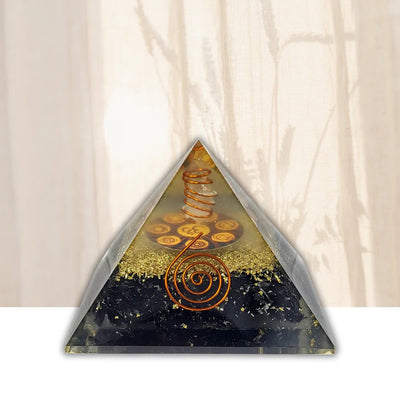
- Black Tourmaline Orgonite Pyramid (₹1,099): 7 cm, for an entrance shelf or desk.
- Black Tourmaline Tea Light Candle Holder (₹1,299 for 2): crystal diyas for the threshold on Diwali night.
- Red String Evil Eye Bracelet (₹599): the wearable version, adjustable from 6 to 9 inches.
Browse the full evil eye collection for more.
Nazar battu for home in Hindi: short summary
नज़र बट्टू वह वस्तु है जो घर के मुख्य द्वार पर बुरी नज़र से बचाव की परंपरा के लिए लगाई जाती है, जैसे नींबू-मिर्च, काला मुखौटा, नीली नज़र (evil eye), घोड़े की नाल या क्रिस्टल। इसे मुख्य दरवाज़े पर, बाहर की ओर मुंह करके और आंखों के स्तर से थोड़ा ऊपर लगाया जाता है। नींबू-मिर्च हर शनिवार बदली जाती है। टूटी या खराब चीज़ तुरंत हटाएं। ये परंपरागत मान्यताएं हैं; अपने परिवार की परंपरा का पालन करें।
Diwali delivery
For Dhanteras (Friday 6 November 2026) order by 30 October; for Diwali (Sunday 8 November) order by 1 November; for Bhai Dooj (Wednesday 11 November) order by 4 November. We deliver across India in 0 to 7 days, with free shipping on prepaid orders and cash on delivery available, and 7-day returns on unused items in original packaging.
Frequently asked questions
Where to hang a nazar battu for home entrance?
Hang a nazar battu at the main entrance, on or just above the door frame, facing outward towards visitors. Nimbu-mirchi and black face masks go outside. An evil eye tree or crystal can sit on an entrance console facing the door, or in the north-east of the home. Customs vary, so follow your family's practice.
Which nazar battu is best for home entrance?
It depends on your home. Nimbu-mirchi is the most traditional but needs weekly replacing. A black face mask suits independent houses and construction sites. For flats, an evil eye hanging or a small evil eye tree on the entrance console is cleaner, lasts for years and doubles as décor. All are traditional symbols, not guaranteed protection.
Is nazar battu good for home according to Vastu?
Classical Vastu texts do not prescribe nazar battu; the practice comes from folk custom that many families follow alongside Vastu. Common guidance is to keep it at the main entrance, keep indoor pieces in the north-east, and remove anything broken or rotting. It is a cultural belief, and keeping one is a personal or family choice.
Which direction should a nazar battu face?
Traditionally a nazar battu faces outward, towards the street, corridor or whoever is approaching the door, because the custom is about catching an outsider's gaze first. An evil eye tree inside the home is usually placed facing the main door. Hanging it facing inward is not the usual custom.
How often should I change nimbu mirchi?
Most families change nimbu-mirchi once a week, usually on Saturday, and throw the old one away without bringing it back inside. Replace it sooner if the lemon rots or the chillies fall off. If weekly upkeep is hard, many households switch to a lasting option such as a glass evil eye or an evil eye tree.
Can I keep an evil eye tree as a nazar battu?
Yes. An evil eye tree is a modern indoor nazar battu that many families keep on the entrance console or a desk. Ours is about 6 to 7 inches tall with glass evil eye beads on adjustable wire and a natural stone base. It needs only dusting and suits homes where a hanging outside is not practical.
Ghar me nazar battu kaha lagana chahiye?
Nazar battu ko ghar ke main darwaze par lagaya jata hai, darwaze ke upar ya bagal me, aur iska muh bahar ki taraf rakha jata hai. Andar rakhne wala evil eye tree ya crystal entrance table par ya north-east kone me rakha ja sakta hai. Har parivar ki parampara alag hoti hai, apni family practice follow karein.
What does it mean when an evil eye breaks?
Popular belief says a cracked evil eye has absorbed nazar and done its work, so it should be replaced. That is a traditional story rather than something proven. Practically, replace it anyway, because cracked or chipped glass has sharp edges, especially on a door handle or within reach of children and pets.
The bottom line on nazar battu for home
A nazar battu is one of India's most shared customs: a striking object at the door that takes the first glance. Choose the type that suits your home, hang it at the entrance facing out, keep it clean and replace anything spoiled or broken. If you want something that lasts and looks good, start with the Evil Eye Tree or the gift-boxed Nazar Protection Set, or explore our protection collection.
More guides: meaning of the evil eye symbol, evil eye placement in Vastu and Feng Shui, evil eye bracelet meaning, black tourmaline bracelet benefits.
Nazar, evil eye, crystal and Vastu meanings described here are traditional beliefs, not guaranteed effects. Prices are as of October 2026.
Shop the products in this guide
Natural stones, free delivery and cash on delivery across India.