Quick answer: amethyst is purple quartz (Mohs 7), coloured by traces of iron and natural irradiation. In crystal tradition it is the stone of calm, clarity and spiritual practice, linked with the third-eye and crown chakras, and in India it is often suggested for Saturn-ruled rashis. People use it as a reminder to slow down, during meditation and at bedtime. Science recognises its geology, not healing effects. Keep it out of long direct sunlight, which can fade the purple.
Amethyst is the most popular crystal in the world, and for good reason: it is beautiful, affordable, hard enough for daily wear, and it carries one of the longest histories of any gemstone. This guide covers amethyst stone benefits as tradition describes them, what science actually says, who wears it, which piece to choose, and how to care for it.
Amethyst at a Glance
| Mineral | Quartz (silicon dioxide) with traces of iron |
| Colour | Pale lilac to deep royal purple |
| Hardness | 7 on the Mohs scale — suits daily wear |
| Main sources | Brazil, Uruguay, Zambia, and India |
| Birthstone | February |
| Chakra (tradition) | Third eye and crown |
| Planet (Indian tradition) | Shani (Saturn) |
| Traditional associations | Calm, clarity, sobriety, spiritual practice |
Amethyst Meaning
The name comes from the Greek amethystos, "not drunk". Ancient Greeks believed the stone guarded against intoxication and carved wine cups from it. Monks wore amethyst rosaries for meditation, and it sat in royal regalia from Egypt to Britain. Today it is best known as a stone of calm and spiritual focus.
Amethyst Stone Benefits (Traditional Meanings)
These are the meanings amethyst carries in crystal and spiritual tradition. They explain why people choose it; they are not proven effects.
1. Calm and relaxation
Amethyst is the classic "calm" crystal. Many people hold it during a breathing exercise or keep it by the bed as part of a wind-down routine.
2. Clarity and focus
It is traditionally linked with a clear mind and better judgement, which is why students keep it on their desks.
3. Meditation and spiritual practice
Through its link with the third-eye and crown chakras, amethyst is one of the most common stones in meditation spaces.
4. Sobriety and self-control
Its oldest meaning. Some people wear it today as a personal reminder of a commitment to cut back on something. It is not a treatment for addiction; if you are struggling, please speak to a doctor.
5. Protection
Amethyst is also considered a protective stone, said to guard against negativity.
6. Sleep routines
Many people keep an amethyst tumble under the pillow or a cluster in the bedroom as a calming bedtime ritual. It does not treat insomnia; persistent sleep problems deserve a doctor's advice.
What Science Says About Amethyst
Science fully recognises amethyst as a mineral: its structure, hardness, and the iron-and-irradiation cause of its colour are well documented. There is no scientific evidence that amethyst produces calm, better sleep or any other physical or psychological effect. Where people find value, it usually comes from the practice it supports — pausing, breathing, setting an intention — with the stone as the reminder.
Amethyst Benefits for Women and Men
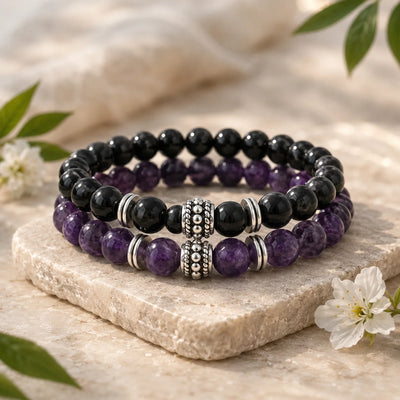
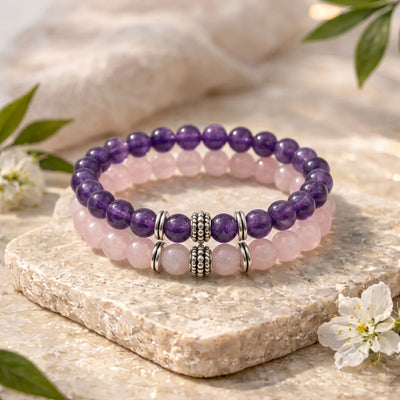
Women often choose amethyst for its colour and its association with calm, intuition and self-care routines; it pairs beautifully with rose quartz in a gift set. Men often choose a deeper-purple, higher-grade bracelet or pair it with black tourmaline or tiger eye for an understated stack. The traditional meanings are the same for everyone.
Which Rashi Can Wear Amethyst?
In Indian practice, amethyst (jamunia or katela) is often suggested as an affordable upratna for Shani (Saturn), and so for Makar (Capricorn) and Kumbh (Aquarius). Western traditions link it to Pisces, Aquarius and Sagittarius. These systems disagree, so treat any rashi rule as background only. If you follow jyotish seriously, ask a qualified astrologer to read your full chart. If you simply like amethyst, no rashi rule stops you from wearing it.
Which Hand Should You Wear an Amethyst Bracelet On?
- Left wrist: the receiving side in crystal tradition — the usual choice for calm.
- Right wrist: the projecting side — chosen for focus and action.
There is no wrong hand. See our guide on which hand to wear a crystal bracelet for more.
Which Amethyst Piece Should You Choose?
| Piece | Best for |
|---|---|
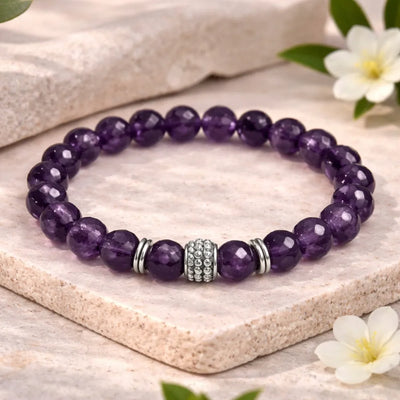
| Amethyst Faceted Crystal Bracelet | The everyday starting point |
| Amethyst Crystal Bracelet — AAA Grade | Deeper, more saturated purple |
| Amethyst & Black Tourmaline Pair | Calm paired with protection |
| Rose Quartz & Amethyst Gift Set | The most popular gifting pair |
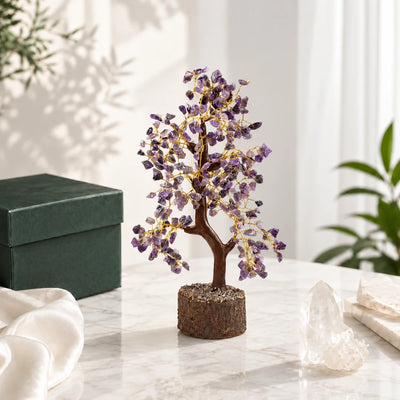
| Amethyst Crystal Tree | A calm corner at home or on the desk |
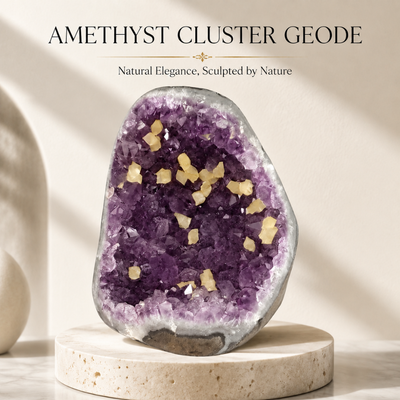
| Amethyst Cluster Geode | A statement piece for a meditation room |
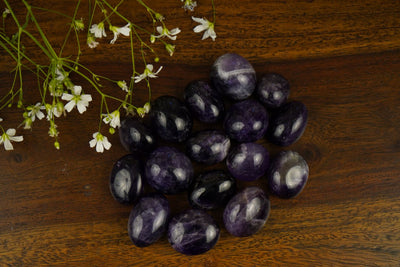
| Amethyst Tumbles (set of 5) | The most affordable start; pocket or pillow |
Browse the full amethyst collection.
How to Identify Real Amethyst
- Colour zoning: natural amethyst usually shows patches of lighter and darker purple; perfectly even colour can mean glass.
- Inclusions: look for tiny wisps or lines; glass often has round bubbles instead.
- Temperature: quartz feels cold and stays cool for a few seconds.
- Price: very cheap, very dark "amethyst" beads are often dyed quartz or glass.
More checks in our real vs fake crystals guide.
How to Cleanse and Care for Amethyst
- Avoid long direct sunlight — the purple can fade over months. Use moonlight, incense smoke, sound or a selenite plate instead.
- A quick rinse is fine for the stone; dry bracelets straight away to protect the elastic.
- Store away from harder stones such as sapphire or diamond to avoid scratches.
Frequently Asked Questions
What are the benefits of amethyst stone?
In crystal tradition, amethyst is associated with calm, clarity, meditation, sobriety and protection. These are traditional meanings rather than proven effects.
Is amethyst a healing stone according to science?
No. Science recognises amethyst's geology but has found no evidence that it heals or changes mood. People use it as part of mindfulness and meditation routines.
Who should not wear amethyst?
There are no physical restrictions. In jyotish, some astrologers advise against Saturn stones for certain charts, so if you follow astrology, check with your astrologer.
Can I wear amethyst every day?
Yes. At Mohs 7 it is durable. Just keep it out of long direct sun.
Can I keep amethyst under my pillow?
Yes — a smooth tumble is the usual choice. Many people find it a comforting bedtime ritual.
Does amethyst fade in sunlight?
Yes, with prolonged exposure, because its colour comes from iron and natural irradiation.
Which rashi should wear amethyst?
Traditionally Makar (Capricorn) and Kumbh (Aquarius), as a Saturn stone. Systems differ, so consult an astrologer if this matters to you.
Crystal meanings described here are traditional and spiritual beliefs, not proven effects. They are not a substitute for medical, psychological or professional advice.
Shop the products in this guide
Natural stones, free delivery and cash on delivery across India.