Quick Answer
Blue apatite is a vivid blue to blue-green variety of apatite, a calcium phosphate mineral — the same mineral family that makes up tooth enamel and bone. In crystal tradition, blue apatite meaning centres on clear self-expression, motivation and focus, and the stone is linked with the Throat and Third Eye chakras.
It is also the mineral that defines 5 on the Mohs hardness scale, so it is noticeably softer than quartz and needs gentle care.
What Is Blue Apatite Stone?
| Mineral | Calcium phosphate, Ca₅(PO₄)₃(F,Cl,OH) |
| Name | From the Greek apatē, "deceit", because it was so often mistaken for other minerals |
| Hardness | 5 — the reference mineral for 5 on the Mohs scale |
| Colour | Blue apatite ranges from blue to blue-green |
| Main sources | Madagascar, Brazil, Mexico |
| Treatment | Much blue apatite is heat-treated to deepen the colour |
| Chakra (crystal tradition) | Throat (Vishuddha) and Third Eye (Ajna) |
Apatite is not only a gem. It is the main source of phosphate for fertilisers, and the hydroxyapatite in your teeth and bones is part of the same mineral group.
Other Colours: Green and Yellow Apatite
Apatite also occurs in green, yellow, purple and colourless forms. In crystal practice, green apatite is usually linked with the Heart Chakra and renewal, and yellow (golden) apatite with the Solar Plexus and motivation. Blue is by far the most common colour in bracelets.
Blue Apatite Meaning and Traditional Benefits
These are associations from crystal practice, not measured effects.
- Clear self-expression — as a Throat Chakra stone, it is traditionally worn by people who need to speak, teach or present
- Motivation — associated with getting started on goals and following through
- Focus and learning — a common choice for students and exam preparation
- Intuition — through its Third Eye association, used in meditation practice
Some websites claim apatite strengthens bones and teeth or suppresses appetite because of its mineral make-up. Wearing a stone does not change your body's chemistry, and there is no evidence for these claims. A bracelet can be a useful reminder — put on before a presentation or a study session — and that value comes from you, not the stone.
Blue Apatite Bracelet Benefits: Who Wears It?
- Students preparing for exams — see our guide to crystals for students
- Teachers, trainers, presenters and content creators
- People starting a new goal who want a daily reminder to keep going
- Meditation practitioners working with the Third Eye
How to Wear a Blue Apatite Bracelet
- Left wrist — the receiving side in crystal tradition, chosen for calm and intuition.
- Right wrist — the projecting side, chosen for speaking and motivation.
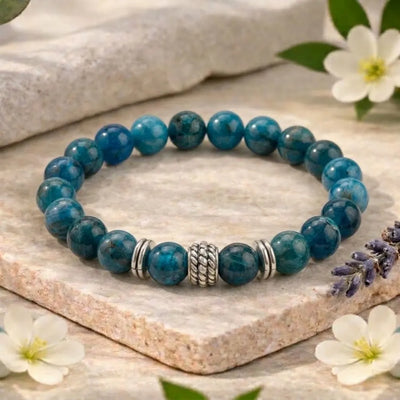
Many people put it on deliberately before a meeting, class or study session. The Blue Apatite Crystal Bracelet (8mm) is made with polished natural blue apatite beads on a stretch cord. Every Calminds piece goes through our S.P.A.C.E. process (Sourced, Purified, Activated, Crafted, Examined) and is Reiki-charged by Sweeny Panjrath before dispatch.
How to Tell If Blue Apatite Is Real
- Expect natural variation. Real apatite beads vary in shade and often show small cracks, cloudy patches or lighter areas. Perfectly identical neon beads are suspicious.
- Watch for dyed howlite. Dyed howlite often has thin grey or dark veins with dye collected in them, and a white core inside the drill holes.
- Look for possible glass clues. Rounded gas bubbles may indicate glass in a faceted imitation, but this is not a conclusive home test and should not be used alone to identify a stone.
- Cool to the touch. Plastic and resin warm almost at once.
- Ask about treatment. Heat treatment is common and accepted; an honest seller will say so.
Avoid scratch tests — at hardness 5, even genuine apatite can be marked by a steel blade. See our real vs fake crystals guide.
How to Care for Blue Apatite
Because apatite is soft and sensitive to acids, it needs more care than most bracelet stones.
- Avoid knocks and rough surfaces. Take it off before the gym, sport, cleaning or kitchen work.
- Keep it away from acids — lemon juice, vinegar and many cleaning products can etch the surface.
- No salt water and no long soaking. Wipe with a soft, slightly damp cloth and dry it.
- Avoid heat and long direct sun, which can affect the colour.
- Store it separately from quartz, tiger eye and other harder stones, which will scratch it.
- Traditional cleansing: moonlight, incense smoke or a selenite plate. See how to cleanse crystals safely.
Crystals That Pair Well With Blue Apatite
- Turquoise — another Throat Chakra stone, for calm communication
- Lapis Lazuli — associated with truth and wisdom
- Amazonite — traditionally used for confidence in speaking
- Fluorite — traditionally associated with focus and study
Frequently Asked Questions
What is the meaning of blue apatite?
In crystal tradition blue apatite stands for clear self-expression, motivation and focus. These are traditional beliefs, not proven effects.
What are the benefits of a blue apatite bracelet?
People wear it as a reminder to speak clearly and stay motivated, often before presentations, classes or study sessions. These are traditional associations.
Which chakra is blue apatite linked with?
The Throat Chakra (Vishuddha) and the Third Eye (Ajna).
Is blue apatite a soft stone?
Yes. It defines 5 on the Mohs scale, so it scratches more easily than quartz (7) and should be stored and worn with care.
Can blue apatite go in water?
Avoid soaking it, and never use salt water or acidic cleaners. A soft, slightly damp cloth is enough.
Is blue apatite good for students?
It is a traditional choice for focus and learning, and many students use a bracelet as a study-time reminder. Good study habits, sleep and practice are what actually improve results.
What is the difference between blue and green apatite?
They are the same mineral in different colours. In crystal practice blue is linked with the Throat and Third Eye, green with the Heart and renewal.
Is blue apatite heat-treated?
Heat treatment is common in blue apatite jewellery; the Smithsonian notes that intense-blue apatite often results from heat-treating naturally green material. Ask the seller whether the colour has been treated.
Can I wear blue apatite every day?
It can be worn with care, but apatite is relatively soft (Mohs 5) and brittle. It is vulnerable to scratches and impact, so remove it for sport, cleaning and manual work, and store it separately from harder stones.
Sources and Further Reading
For apatite's Mohs hardness and the occurrence of intense-blue, heat-treated material, see the Smithsonian National Museum of Natural History's Apatite record. For further gemmological details on apatite hardness, brittleness and treatment, see the International Gem Society's Apatite Faceting Guide. Traditional associations are presented as beliefs, not measured effects.
Disclaimer: Crystal meanings described here are based on traditional beliefs and spiritual practices. They are not a substitute for medical, financial, or professional advice.
Shop the products in this guide
Natural stones, free delivery and cash on delivery across India.