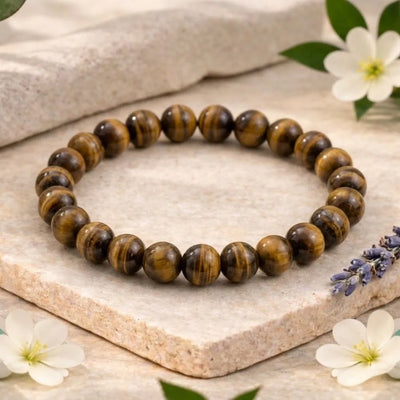
Quick answer: To choose a healing crystal, start with your intention, match it to a stone traditionally associated with that quality, notice which one you feel drawn to, and use it consistently. Beginners often start with amethyst for calm, rose quartz for self-love, black tourmaline for protection, tiger eye for confidence or fluorite for focus. These are traditional meanings, not a substitute for medical advice.
Quick Answer
There is no scientifically proven “best” healing crystal. A practical way to choose one is to start with your purpose, learn the stone's physical properties and traditional symbolism, consider its appearance and care requirements, and then choose a piece you genuinely like. Crystal and chakra meanings are spiritual traditions, not established medical treatments.
How to Choose a Crystal: 5 Simple Steps
- Define your intention: decide whether you want a meditation reminder, jewellery, home décor, a gift or a stone associated with a particular tradition.
- Learn the traditional meaning: compare a few stones instead of relying on one seller's claims.
- Check the actual mineral: look at hardness, water sensitivity, colour and treatment information.
- Choose the form: bracelet, pendant, tumble, tower, tree or loose specimen depending on how you plan to use it.
- Choose a transparent seller: look for clear product descriptions, treatment disclosure, realistic claims and appropriate return information.
Choose by Intention, Not by Guaranteed Outcome
Modern crystal practices associate different stones with different themes. These associations can be useful as symbols for meditation or personal reflection, but they should not be treated as promises of health, financial or relationship outcomes.
| Intention or theme | Common traditional associations | Responsible use |
|---|---|---|
| Calm and reflection | Amethyst, Howlite | Mindfulness, journaling or quiet reflection |
| Love and compassion | Rose Quartz, Rhodonite | Personal symbolism or gifting |
| Grounding and protection symbolism | Black Tourmaline, Obsidian | Personal ritual or boundary reminder |
| Courage and confidence | Tiger Eye, Carnelian | Intention-setting before a challenge |
| Focus and learning | Fluorite, Clear Quartz | Desk or study-space reminder |
| Prosperity symbolism | Pyrite, Citrine, Green Aventurine | Traditional or decorative symbolism, not a financial guarantee |
What Does “Healing Crystal” Mean?
“Healing crystal” is commonly used in spiritual and wellness communities for stones that are believed to have particular meanings or energetic qualities. Scientifically, a crystal is a mineral or material with an ordered internal structure; its physical properties can be studied and measured.
Claims that a crystal can cure disease, treat anxiety, guarantee wealth or change a person's health condition are not established by scientific evidence. A crystal can still be meaningful as jewellery, décor, a meditation object or a personal ritual cue.
How to Choose a Crystal by Physical Properties
Do not choose only by symbolism. The mineral itself matters, especially if you plan to wear or handle it every day.
| What to check | Why it matters |
|---|---|
| Hardness | Helps you understand how easily the surface may scratch. |
| Water sensitivity | Some minerals and jewellery components should not be soaked. |
| Sunlight sensitivity | Some colours or treatments may fade with prolonged exposure. |
| Treatment | Dyeing, heating or other treatments can affect appearance and should be disclosed. |
| Construction | Bracelet elastic, wire, glue and metal parts may need different care from the stone. |
Which Crystal Form Should a Beginner Buy?
| Form | Good for |
|---|---|
| Bracelet | Everyday jewellery and a visible reminder of an intention |
| Tumbled stone | Carrying, meditation or keeping on a desk |
| Pendant | Wearable symbolism without a wrist bracelet |
| Cluster or tower | Home or office display |
| Crystal tree | Decorative and traditional gifting |
5 Beginner-Friendly Choices
- Amethyst — commonly associated with calm, reflection and spiritual practice.
- Rose Quartz — commonly associated with love, compassion and self-care symbolism.
- Black Tourmaline — commonly associated with grounding and protection symbolism.
- Tiger Eye — commonly associated with courage, confidence and focus.
- Clear Quartz — commonly associated with clarity and intention-setting.
These are traditional associations rather than scientifically established effects.
How to Choose Between Similar Crystals
If several stones appeal to you, compare them on three levels: meaning, mineral properties and practical use. For example, if you want a bracelet that you can wear regularly, care requirements and durability may matter more than choosing a stone because of a long list of claimed benefits.
Can You Choose a Crystal Online?
Yes. When shopping online, check the exact stone name, bead or specimen size, treatment information, clear product photographs, care instructions and seller policies. Do not rely on temperature, weight or a single “test” as proof of authenticity.
For a more detailed authenticity guide, see Real vs Fake Crystals: Identification Guide.
Should You Choose a Crystal That “Calls” to You?
Some spiritual traditions describe this as being drawn to a particular stone. It can be a useful way to describe personal preference, but it is subjective rather than a scientifically measurable selection method. You can simply choose the stone whose colour, shape, meaning or design you prefer.
How to Start Using Your Crystal
- Clean the piece according to its physical care requirements.
- Choose one simple intention or personal reminder.
- Keep it somewhere you will naturally notice it, such as a desk or meditation space.
- If you enjoy spiritual practices, include it in meditation, journaling or another personal ritual.
- Review your experience without expecting a guaranteed result.
For traditional cleansing ideas and practical care, see the Calminds crystal cleansing guide.
Common Beginner Mistakes
- Buying many stones before understanding how to care for them.
- Choosing a product only because it promises a guaranteed result.
- Using unreliable home tests as proof that a stone is natural.
- Ignoring water, sunlight or scratch sensitivity.
- Assuming a crystal can replace medical, mental-health or financial advice.
Frequently Asked Questions
What is the best crystal for a beginner?
There is no universal best choice. Amethyst, Rose Quartz, Black Tourmaline and Clear Quartz are popular starting points because their traditional meanings are familiar and they are available in many forms.
How do I know which crystal is right for me?
Start with your intention, compare traditional associations and physical care requirements, then choose a stone you genuinely like. Personal preference is a valid reason to choose a crystal.
Can crystals heal anxiety or other health conditions?
There is no established scientific evidence that crystals treat anxiety, illness or other health conditions. They may be used as personal meditation or mindfulness objects, but they should not replace qualified care.
How many crystals should I buy first?
One or two is enough for most beginners. Starting small makes it easier to learn each stone's care requirements and develop a simple personal routine.
Do crystals need to be charged?
Charging is part of some spiritual crystal traditions, but there is no established scientific evidence that it increases a stone's physical or healing power. If you enjoy the ritual, use it as a personal practice.
Can I wear a crystal every day?
Usually, if the stone and jewellery construction are suitable for everyday wear. Check the specific mineral's hardness and water sensitivity and remove the piece during activities that could damage it.
Final Takeaway
The right crystal is not necessarily the rarest, most expensive or most strongly marketed stone. Choose based on your intended use, the stone's real physical properties, traditional symbolism, care requirements and your own preference. That approach keeps crystal buying practical, transparent and meaningful.
Disclaimer: Crystal, chakra and spiritual associations described here reflect traditional or personal practices. They are not scientifically established medical treatments and are not a substitute for professional medical, mental-health or financial advice.
Shop the products in this guide
Natural stones, free delivery and cash on delivery across India.