Quick Answer
To tie a rakhi correctly, the sister prepares a puja thali, lights a diya, performs a short aarti, applies a tilak of roli and rice to her brother's forehead, ties the rakhi on his right wrist while offering a silent blessing, and feeds him a sweet — after which the brother gives a gift and a promise of protection in return. Rakhi is traditionally tied by a sister to a brother, but today it's also tied sister to sister, to a bhabhi (Lumba Rakhi), and between cousins and close friends.
Tying a rakhi looks simple, but the order of the steps, the wrist you choose, and who is allowed to tie it to whom all carry meaning rooted in centuries of tradition. This is the complete, in-depth guide — the full ritual step by step, which hand to use and why, who can tie rakhi to whom, the blessings and words people say, and the questions searched for most around Raksha Bandhan 2026.
How to Tie Rakhi: Step-by-Step

The rakhi ceremony has seven simple stages. What follows isn't just the "what" but the "why" behind each one, so the ritual feels meaningful rather than mechanical.
- Prepare the puja thali. Arrange the rakhi, a small bowl of roli (vermillion), a few grains of uncooked rice (akshat), a diya (oil or ghee lamp), and sweets on a decorative plate. The thali is the ritual in miniature — everything the ceremony needs, gathered in one place.
- Light the diya. The lamp is lit before anything else. Fire is treated as a witness in Hindu ritual, and lighting it marks the moment the ceremony becomes sacred rather than casual.
- Perform the aarti. The sister slowly circles the lit diya in front of her brother. This is a gesture of blessing and of warding off negativity before the protective thread is tied.
- Apply the tilak. A tilak of roli is placed on the brother's forehead, and a few grains of rice are pressed onto it. The spot between the brows is considered a seat of focus and blessing; the rice symbolises prosperity and the wish that good fortune "sticks."
- Tie the rakhi. The sister ties the rakhi on her brother's right wrist, usually while making a silent wish or reciting a short blessing for his long life and well-being. This is the heart of the ceremony — the thread is a raksha sutra, a "thread of protection."
- Offer sweets. The sister feeds her brother a sweet by hand, sealing the ritual on a note of sweetness and marking the renewal of the bond for the year ahead.
- Exchange gifts and the promise. The brother gives a gift or shagun and, in the spirit of the day, promises to protect and stand by his sister. The exchange is mutual — protection and love flowing both ways.
The whole ceremony takes only ten to fifteen minutes, but those minutes carry the entire meaning of Raksha Bandhan: the tilak, the thread, the sweet, and a vow that goes in both directions.
Which Hand to Tie Rakhi On?

Rakhi is traditionally tied on the right wrist. In Hindu tradition, the right side of the body is associated with giving, action, and outward energy, which is why auspicious and protective threads — from the kalava (mauli) to the rakhi — are tied there. The person receiving the rakhi usually extends their right hand, often with a small closed fist or a few grains of rice held in the palm, a posture linked to receiving blessings with respect.
If the right wrist is injured, in a cast, or genuinely unavailable, tying the rakhi on the left wrist is an accepted alternative. The tradition is clear on the underlying principle: the intention behind the act matters more than a rigid rule about which wrist. A rakhi tied with love on the "wrong" hand still carries its full meaning.
Who Can Tie Rakhi to Whom?

The sister-to-brother rakhi is the most traditional and widely recognised form, but the custom has expanded naturally over generations. There has never been a single "correct" version — the ritual has always been about the intention of protection and love, and who it's shared with has broadened over time.
- Sister to brother: The original and most common form, symbolising protection, blessing, and lifelong support.
- Sister to sister: Increasingly common between sisters — and between women who feel like sisters — as a symbol of mutual love and solidarity rather than protection in the traditional sense.
- Sister to bhabhi (Lumba Rakhi): A regional tradition, especially strong in Rajasthan, where a special Lumba Rakhi is tied to the sister-in-law's bangle alongside the brother's rakhi, welcoming her fully into the family bond. Our full Lumba Rakhi for Bhabhi guide covers this custom in detail.
- Between cousins and close friends: Many people tie rakhi to cousins or friends who feel like siblings, regardless of blood relation.
- Beyond the family: Historically, rakhi has crossed even those lines — priests tie protective threads on devotees, and there is the famous legend of Rani Karnavati sending a rakhi to Emperor Humayun as a plea for protection. Today, many people also tie rakhi to soldiers as a gesture of gratitude.
Sister Tying Rakhi to Brother: The Ritual and Its Meaning
When a sister ties a rakhi to her brother, she isn't only decorating his wrist — she's renewing a promise. The thread represents her prayer for his well-being, and by accepting it he commits to protecting and supporting her. This two-way vow is what separates Raksha Bandhan from an ordinary gift exchange.
The ritual is anchored in several well-loved legends. Goddess Yamuna is said to have tied a thread on her brother Yama, the god of death, who in return blessed anyone bearing a rakhi with protection from untimely death. Goddess Lakshmi tied a thread around King Bali to remind him of a vow. Draupadi is remembered for tearing a strip of her sari to bind Krishna's bleeding wrist, and Krishna repaid that small act of care many times over. Each story reinforces the same idea — a simple thread carries an unbreakable promise.
Sister Tying Rakhi to Sister
Sister-to-sister rakhi has become one of the most heartfelt modern additions to the festival. Whether between biological sisters, cousins, or best friends, it celebrates a bond of equals — two people choosing to look out for each other. The steps are the same as the traditional ceremony; only the meaning shifts, from protection to partnership. Many sisters exchange rakhis with each other, tying one on the other's wrist so the gesture is fully reciprocal.
What to Say While Tying a Rakhi (Blessings & Quotes)
There's no single fixed phrase you must recite. Traditionally, the person tying the rakhi offers a short blessing for the other's long life, health, and happiness — many simply hold that wish silently as they tie the knot. If you'd like words to say aloud or write in a card, here are original lines you can use.
For a brother:
- "This thread carries every prayer I have for you — stay safe, stay strong, stay mine."
- "No distance and no year will ever loosen this knot. Happy Raksha Bandhan, bhai."
For a sister:
- "We were the first friends we ever had — this rakhi is my promise to be the last too."
- "Same roots, same rakhi, same forever. Wishing you the year you deserve."
Feel free to adapt these to your own relationship — a line in your own words will always mean more than a borrowed one.
Sister Tying Rakhi to Brother: Drawing & Craft Ideas
Around Raksha Bandhan, many students and parents look for a simple "sister tying rakhi to brother" drawing for school projects or greeting cards. You don't need to be an artist — the scene is easy to sketch in a few shapes:
- Draw two simple figures facing each other, the sister on the left and the brother on the right.
- Show the brother's right arm extended, with a small circular rakhi on his wrist.
- Add a red tilak dot on the brother's forehead.
- Place a small thali between them with a diya (a flame), a few sweets, and extra rakhis.
- Finish with a warm background — a rangoli border or a "Happy Raksha Bandhan" banner works well.
It's a lovely activity to do with the ritual rather than instead of it — sketch the card first, then tie the real rakhi.
Common Mistakes to Avoid
- Skipping the tilak: The tilak is considered as significant as the rakhi itself. It's easy to rush past, but traditionally it's part of the core ceremony, not an optional extra.
- Tying during Bhadra Kaal: Many families avoid tying rakhi during Bhadra, a period considered inauspicious for starting sacred rituals. Always check the year's muhurat before scheduling.
- Tying it too loosely or too tightly: A thread tied too loosely slips off before the day ends. This is exactly why adjustable, bracelet-style crystal rakhis have become popular — they stay put and can be worn long after the festival.
- Forgetting the sweet: A small step, but skipping it is considered leaving the ritual incomplete in most traditions.
- Defaulting to the left wrist out of habit: Use the right wrist unless there's a real reason not to.
Rakhi Tying Muhurat 2026
Raksha Bandhan 2026 falls on Friday, 28 August. Good news for this year: Bhadra ends before sunrise, so the morning is clear for tying rakhi without the usual wait. For the exact shubh muhurat window, Bhadra details, and city-wise timing, see our full Raksha Bandhan 2026 Date & Muhurat guide.
Choose a Rakhi Worth Tying

A ritual this meaningful deserves a thread that lasts longer than a day. Every rakhi below is handcrafted with genuine natural gemstones and Reiki-charged before shipping — chosen here by the intention you want to send.
For love and the heart:
- Rose Quartz Heart Rakhi — the stone of unconditional love and emotional warmth.
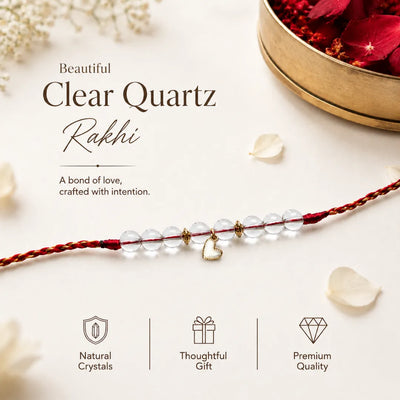
- Clear Quartz Lumba Rakhi — the "Master Healer," for clarity and amplified intention.
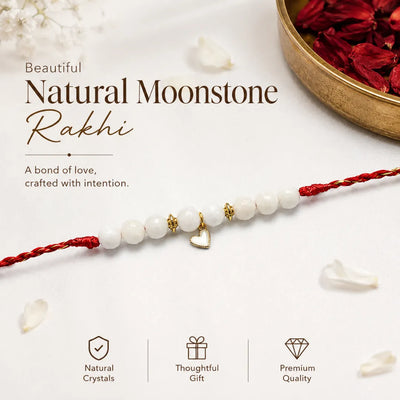
- Natural Moonstone Heart Rakhi — for emotional balance and gentle intuition.
For calm and clarity:
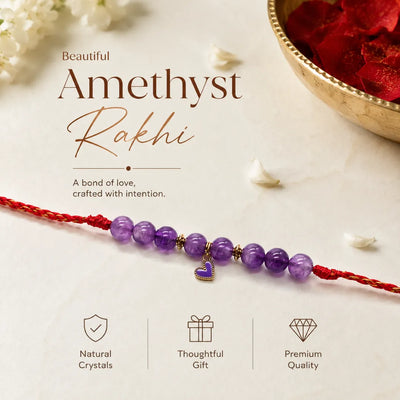
- Amethyst Lumba Rakhi — for calm, focus, and spiritual awareness.
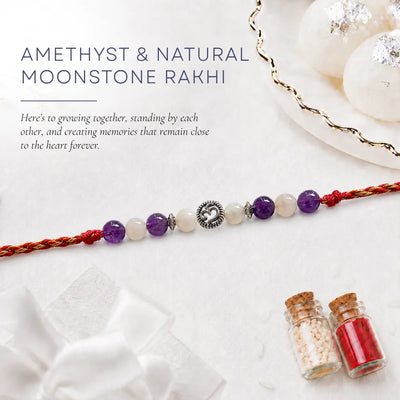
- Moonstone & Amethyst Rakhi — pairing intuitive balance with a settled mind.
For protection and grounding:
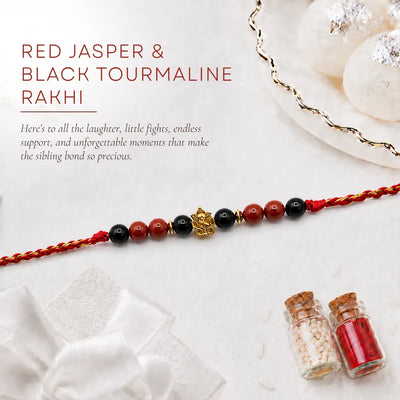
- Black Tourmaline & Red Jasper Rakhi — protection paired with grounded strength.
- Black Tourmaline & Smoky Quartz Rakhi — for deep protection and stability.
- Black Tourmaline & Natural Moonstone Rakhi — a shield of protection softened with emotional calm.
For luck and prosperity:
- Green Aventurine & Clear Quartz Rakhi — for luck, opportunity, and fresh starts.
- Red Jasper & Citrine Rakhi — for grounded energy and prosperity.
Not sure which one fits your sibling? Match it to their star sign with our Crystal Rakhi by Zodiac Sign guide, or browse by feeling in Top Rakhis by Intention.
Reiki-Charged for the Ritual
Every Calminds crystal rakhi passes through our proprietary S.P.A.C.E. process — sourced, purified, activated, crafted, and examined — developed by founder Sweeny Panjrath, a Certified Reiki Grandmaster with 15 years of Reiki practice. It's a small detail, but it adds a layer of intention to a ritual that's already full of meaning.
Frequently Asked Questions
How do you tie a rakhi step by step?
Prepare a puja thali with the rakhi, roli, rice, a diya, and sweets. Light the diya, perform a short aarti, apply a tilak to the forehead, tie the rakhi on the right wrist while offering a blessing, feed a sweet, and exchange a gift and a promise of protection.
Which hand should the rakhi be tied on?
The right wrist is the traditional choice, linked to giving and outward blessing. The left wrist is an accepted alternative if the right one is injured or unavailable — the intention matters more than the wrist.
Who can tie rakhi to whom?
Traditionally, a sister ties rakhi to her brother, but the custom now includes sister-to-sister rakhis, Lumba Rakhis tied to a bhabhi, and rakhis shared between cousins and close friends. Historically, it has even been tied beyond the family, such as to soldiers and, in legend, between rulers.
Can a sister tie a rakhi to another sister?
Yes. Sister-to-sister rakhi has become increasingly common, symbolising mutual love and solidarity. The steps are the same as the traditional ceremony.
What do you say while tying a rakhi?
There's no single fixed phrase. Many recite a short blessing for the sibling's long life and well-being, while others hold the wish silently as they tie the knot. A line in your own words is always meaningful.
What does the brother do in return?
After the rakhi is tied, the brother gives a gift or shagun and offers a promise to protect and support his sister. The exchange is mutual — care flowing both ways.
Can you tie a rakhi to someone far away?
Yes. Many families post the rakhi in advance so the sibling can tie it themselves on the day, often over a video call. Send it two to three weeks before 28 August 2026 to be safe.
What is the significance of the tilak before tying rakhi?
The tilak of roli and rice is applied to the forehead before the rakhi is tied and is considered to symbolise protection, blessing, and good fortune for the year ahead.
Ready for this year's ceremony? Explore the full Crystal Rakhi Collection — handcrafted, Reiki-charged, and ready for the ritual.
Shop the products in this guide
Natural stones, free delivery and cash on delivery across India.